How to make the most of your layover at MIA

Hosting nearly 100 airlines and over 1,000 flights per day, Miami International Airport (MIA) is one of the largest airports in the United States. It also has a great location, making it an enticing stop for travelers on long layovers. Why sit around the terminal waiting for your next flight when you have time to explore one of the world’s most-exciting destinations? Use our insider guide to make the most of your layover of three hours or more and enjoy a mini vacation discovering the many wonderful sights and things to do nearby.

Little Havana (15 Minutes Away)

What to Do: 

  • Stroll down famous Calle Ocho (SW 8th Street) and stop in at art galleries like Futurama 1637 Art Building and Cuban cigar shops. There are also colorful rooster sculptures along the way to take photos with.
  • Go to one of the many walk-up windows that sell Cuban coffee and enjoy a cortadito. While sipping on your delicious coffee, stop by Máximo Gómez Park (also known as Domino Park) and watch the locals discuss politics in Spanish while playing dominoes.
  • If you are a music lover, head to the iconic Ball & Chain nightclub (it dates back to the 1930s), where there is almost always a live salsa band playing, even in the daytime. Or check out Cafe La Trova, which was named one of The World’s 50 Best Bars for its hand-crafted cocktails and “cantineros” (bartenders) who sing along to the live Cuban music. It’s even MICHELIN-recommended. While you’re there, try the Cuban cuisine by award-winning chef Michelle Bernstein.

Wynwood (20 Minutes Away)

What to Do: 

  • The Wynwood Walls are the must-see attraction of the artsy Wynwood neighborhood. It’s a mostly outdoor museum featuring the brightly colored work of graffiti muralists from around the world.
  • Wynwood Art Walk offers a variety of tours, such as a Graffiti Golf Cart Tour, the Best of Wynwood: Street Art Walking Tour and a Graffiti Spray Paint Station so you can create your own spray art.
  • Wynwood is also home to some of the trendiest restaurants in Miami, such as MICHELIN Bib Gourmand choice Doya and MICHELIN one-star Hiden. Or try El Bajareque, which has been around for four decades. It serves authentic, affordable Puerto Rican cuisine.

Coral Gables and Miracle Mile (20 Minutes Away)

What to Do: 

  • The Biltmore Hotel Miami – Coral Gables is a National Historic Landmark that is worth a visit. Open since 1926, its extravagant 150 acres are home to the largest hotel pool in the Eastern U.S., a golf course, a cigar room, a spa and several top-rated restaurants. 
  • Miracle Mile in downtown Coral Gables is a beautiful street lined with towering palm trees and Mediterranean-style architecture. In addition to cafés for dining alfresco and boutiques offering the latest fashion, Miracle Mile is known for its many luxurious bridal shops.
  • Nearby Giralda Plaza is a pedestrian-friendly area with many restaurants, bars and places to shop. At night, the beautifully lit trees make it a perfect place for a leisurely stroll.

South Beach (30 Minutes Away)

What to Do:

  • The Art Deco Historic District in South Beach is home to the iconic pastel-colored stucco buildings of the 1920s and ‘30s that have become an iconic symbol of Miami. The district, made up of approximately 800 buildings, is on the National Register of Historic Places. Walking tours are offered daily from the Art Deco Welcome Center.
  • South Pointe Park is at the southernmost tip of Miami Beach. If you love the beach, you must see the turquoise blue ocean from the 450-foot South Pointe Pier or take a dip in the warm water of the Atlantic Ocean. You can also walk along the water and take in views of Downtown Miami, upscale Fisher Island, and PortMiami’s cruise ships. 
  • Lincoln Road is an eight-block-long outdoor mall with fountains and a botanical garden. You can shop and eat at more than 200 boutiques and restaurants as well as purchase some colorful Miami artwork souvenirs at Romero Britto’s gallery. If you have time, the Art Deco-style Colony Theatre is a great place to see a play.

Practical Tips for a Layover

Luggage Storage

Luggage storage is on the second level of Central Terminal E and open daily from 5 a.m. to 9 p.m. Prices range from $12-24 per bag (depending on size). Call (305) 869-1163 for more information.

Transportation Options 

Taxis and rideshares (such as Uber and Lyft) are the quickest and most-efficient methods of transportation. You can catch a taxi or rideshare at the arrivals (ground) level of the airport, outside of the baggage claim areas.

The MIA Mover is a free elevated train service that connects passengers to the Miami Rental Car Center and Miami Central Station, where you can catch public transportation. It is located on the 3rd level between the Dolphin and Flamingo garages. Use the 3rd level Skyride (moving walkways) to connect between terminals and the train station. Trains depart every 30 minutes on weekdays and every 15 minutes on weekends.

If you prefer public transportation, use the Metrobus or Metrorail (Orange line) to reach Downtown Miami and beyond. To get to Miami Beach, one of the easiest (and least expensive) ways is to take the Route 150 Miami Beach Airport Express bus. It operates seven days a week from 6 a.m. to 11:40 p.m. and picks up passengers every 30 minutes. The fare is $2.25 each way.

Nearby Hotels For Longer Layovers

If you need a close place to stay overnight, or just rest, the Miami International Airport Hotel, located on the 2nd level of Central Terminal E, is the only hotel inside MIA. Service animals are welcome and conference rooms and restaurants are onsite. Or explore one of the many other hotels in the MIA area.

Plan Your Return

Allow at least two hours to return to MIA departures and enough time to pass through security and get to your gate. If you’ve checked bags or need to recheck them, add more time.

Originally published on miamiandbeaches.com.
Despite centuries, Mayan healers are still curing, caring with ancient, sacred rituals

mayahealers

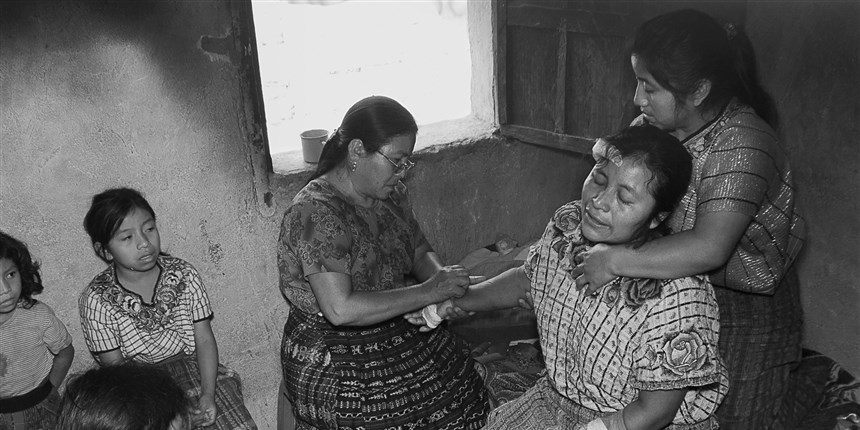
Berta Navichoc, a healer and bonesetter, center, treats Marta Mendoza who was wounded when she fell off a pick-up truck on her way to work. (Photo/Fran Antmann)

Of Guatemala’s 14 million inhabitants, approximately half have indigenous roots, including Maya, Garifuna and Xinca peoples. Throughout the centuries, indigenous communities have endured much turmoil, from the Spanish conquest to a 36-year civil war that resulted in more than 200,000 deaths where more than 80 percent of those were Mayan, according to a U.N.–based report.

But what’s remarkable is that despite violence and death, these communities’ ancient practices have prevailed.

A visually stunning new book details one of the Maya’s most enduring traditions, their healers.

“I was privileged to be allowed to photograph the healings, to listen to their stories and dreams, and to enter the forest with them to photograph Maya ceremonies performed at sacred sites,” said award-winning photographer Fran Antmann, author of the recently published “Maya Healers: A Thousand Dreams.”

 Pedro Mendoza tries to walk again with the help of his mother and brother. After a work-related accident, Pedro’s broken leg was healed over several weeks by healer and bonesetter Berta Navichoc.  (Photo/Fran Antmann)

Antmann, who is known internationally for her several publications and photography collections, said she chose the word “dreams” in the title not just because it’s poetic, but because it’s a big part of understanding their centuries-old practices.

“The healers (curanderos) are said to derive their power and knowledge from dreams,” she said. “The healers are believed to have connections with the supernatural.”

Antmann focused her research in a village called San Pedro La Laguna on the shores of Lake Atitlán.

In rural parts of Guatemala, medical care is usually expensive and geographically inaccessible. Spanish is a distant second language to the indigenous population, and many feel disdain from doctors. This explains, Antmann said, why it is more comforting for members of some indigenous communities to go to their local healer.

Healers are determined at birth, and it is believed that individuals are born with this “don,” or gift. It’s considered a sacred profession, and one decides to accept it or not. They don’t go to medical school, nor do they get paid.

Healers who use objects to realign the bones, and then their hands to finish the treatment are called “hueseros” or “bonesetters.” They feel like they don’t even guide their hands to heal, explains Antmann, their hands guide them.

 Healer, bonesetter and midwife Josefina Vasquez, photographed by Fran Antmann during a healing. (Photo/Fran Antmann)

“The bonesetters often describe how they found through dreams the sacred bones they use for healing,” said Antmann. “For the Maya, the place and role of dreams is ingrained in their culture.”

Antmann was impressed by the faith of the patient and the healer.

“The healing takes place where the patient lives, or sometimes in their sacred Maya spaces,” said Antmann. “The whole family is involved – it’s a communal affair. Family members are praying in the adjacent room, and their participation is integral in the healing process.”

 Fran Antmann’s book, “Maya Healers” (Nirala Publications)

The Maya’s rich traditions have survived much upheaval and violence since the arrival of the Spanish in the fifteenth century.

For Antmann, who was born in the Bronx, New York to German and Austrian Holocaust survivors, it’s been a privilege to be able to witness the Mayan way of life.

“I feel an umbilical cord to Guatemala,”Antmann said, adding that her adoptive daughter is from Guatemala.

As a Fulbright scholar, she spent 1979 through 1981 in the Peruvian Andes recovering the work of the late acclaimed but forgotten photographer Sebastian Rodriguez. A current professor at Baruch College in NYC, she spent the past 12 summers in Guatemala. Though she has recently focused on Guatemala, she has devoted much of her award-winning photography to documenting the people and places of Mexico and Peru.

 A view of Lake Atitlan, which as Antmann explains in her book, is threatened by pollution and overpopulation. (Photo/ Fran Antmann)

“What is most significant to me is the way I was accepted into this community, and how I gradually gained access to and built a bridge of trust to the families and natural healers,” said Antmann.

Another important part of this long trajectory was the experience of going back to San Pedro with the book in hand, sharing it with the healers, and seeing how much it meant to them,” she said. “I can’t think of anything more gratifying for a photographer working in another culture.”

For more information on the book: http://www.franantmann.com/book-maya-healers

Article originally published on NBCNews.com.

What’s El Dia de Los Muertos?

DOD

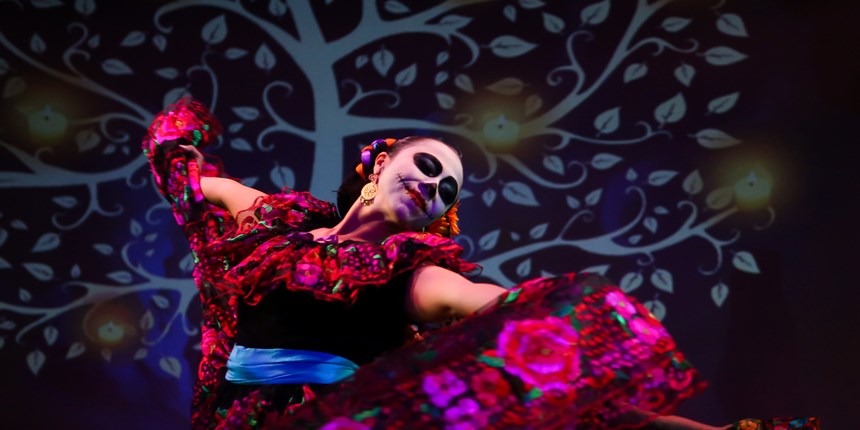
A dancer performs at the Calpulli Mexican Dance Company’s annual “Dia de los Muertos” production. (Photo/ Kristin Slaby)

What is El Día de los Muertos, or “Day of the Dead,” as it’s now known in the U.S.?

Despite the white faces and the skulls, it’s not meant to be a spooky holiday and it’s not Halloween. Also known as Día de Muertos, the celebration originated in central and southern Mexico. Those who celebrate it believe that at midnight on October 31, the souls of all deceased children come down from heaven and reunite with their families on November 1, and the souls of deceased adults come visit on November 2.

Families make colorful altars in their homes in honor of their deceased loved ones, and the altars are decorated with flowers, candles, their loved one’s favorite food and pan de muerto (a slightly sweet bread specifically made for this time).

The festivities continue in the cemetery, where families bring picnics, play music and sometimes even spend the night as a way to celebrate the lives of those who are no longer on this earth.

The inextinguishable tradition dates back 3,000 years, during the time of the Aztecs. It survived through the 16th century, when the Spanish arrived to central Mexico and thought the tradition to be sacrilegious. Instead of it being abolished, however, the celebration evolved to incorporate elements of Christianity, such as celebrating it on November 1 and 2 instead of on its original summer observance to coincide with All Saints’ or All Souls’ Day, a time to pray for departed souls.

In San Francisco, California, Martha Rodríguez-Salazar has been working with the San Francisco Symphony for the past 10 years in their annual Día de los Muertos community celebration, which includes music and altars commissioned from different artists.

 Dia de Los Muertos event at San Francisco Symphony. (Photo/Marc Hors)

“My parents never made an altar while I was growing up, but some of my friends did,” said Rodríguez-Salazar, a conductor, flutist, mezzo-soprano and teacher who was born and raised in Mexico. “Every November 1st and 2nd, they put altars of family and friends. In the Bay Area, it’s become sort of in fashion – its own thing — where people dress up. In Mexico, it’s not that way.”

“Here is where you paint your face,” said Rodríguez-Salazar. “Now with globalization, it’s mixing,” she explained.

“The tradition [in Mexico] is you invite people to your house for pan de muerto and then you go to the cemetery. You eat food there, drink tequila or mezcal, and that’s the celebration. You want to leave your door open because a stranger can bring a spirit of your loved one. You never know.”

 Dina Leor’s Mexican folk store in New York City has been busy selling items for altars to celebrate El Día de los Muertos. (Photo/ Almeida Photography)

Dina Leor, owner of La Sirena Mexican folk art store in New York City, has been an avid celebrator of Día de Muertos since she was a little girl, and she’s not even Mexican.

“My mom is from Argentina and my dad is American — and my heart is Mexican,” Leor told NBC News. “I was around 11 when I first went to Mexico, and I fell in love with the country and culture; I feel so connected to it.”

Leor opened her store in 1999, and for 18 years she’s been bringing a bit of Mexico to NYC, from its colorful trinkets to its celebrations.

On October 21, she held a Dia de los Muertos pop-up market where she sold everything one needs to make an altar.

“I’d say 90 percent of the people who came were Mexican,” said Leor. “A lot of people were coming to buy stuff for their altars. Copál— resin to burn on the altar, and mini papel picados (paper cut outs), and the flowers made out of paper were best sellers.”

Leor was also asked to do another pop-up at the American Folk Art Museum in New York City, which celebrated Día de Muertos last Saturday.

“A lot of people were asking, ‘Is this Halloween?’,” Leor said about the visitors, mostly non-Latinos, who were passing by her stand.

“My tables looked like altars with papel picado, figurines, bark paper, and José Guadalupe Posada’s prints. This was introducing them to Día de Muertos. The museum wanted to have a Day of the Dead feel, not Halloween, and the woman who ran the gift shop brought pan de muerto.”

Leor said the celebration has always made sense to her.

“When I was 8, I made a space for my deceased grandmother and lit a candle for her, and left water for her, and I didn’t even know about Día de Muertos,” she said, but not everything was as natural. “Before I had my store, I was worried about having skeletons, and now I love them. I find them colorful and joyful.”

Juan Castaño, co-founderof Calpulli Mexican Dance Company, moved to New York with his family when he was 22.

“I am a Mexican-American born in the border city in El Paso, Texas. My identity is both Mexican and American. Growing up, I knew about Día de Muertos, but it’s not something my family really did, since it came more from southern Mexico,” he said. “When we moved to New York, I met people from Puebla, and I started learning more.”

 Dancers perform at the Capulli Mexican dance Company’s annual “Dia de los Muertos” production. (Photo/ Stefanie Delgado)

When his father passed away, Castaño wanted to do something special, so he decided to make his first altar.

“It was really a beautiful experience…It’s a very personal thing,” he said. “I remember looking at the altar and putting coffee there, because my dad loved coffee. My mom said, ‘No, he would never like it like that — and she took it away and made it piping hot with a little sugar, and the experience created a conversation between us,” said Castaño. Dia de Muertos is very powerful, because you feel peace and a beautiful experience remembering someone and celebrating what they did and who they were.”

His 14-year-old Calpulli Mexican Dance Company has always incorporated elements from Día de Muertos in performances that started on October 26th and will have a final performance on November 4 in New York’s prestigious Town Hall.

“The theme and the message of the story if what Día de Muertos is about — the hope that we have to reconnect with the loved ones we have lost,” he said. “The world of the dead, according to Aztec mythology is called Mictlan – a beautiful world where we all want to be.”

Although they are separate celebrations, Castaño believes there has been a huge influence on Día de Muertos from the U.S. and Halloween, namely the face painting.

“I think anytime cultures come together, it’s a way to bring communities together. In my opinion I don’t think it’s a negative thing,” he said. “I have nephews that love Halloween, but I think it’s really nice for them to know about Dia de Muertos, too — it’s such a nice way to deal with death and celebrate death in a healthy, constructive way.”

“For young people, the boogie man [and Halloween] can be traumatizing,” said Castaño. “Maybe we can disarm the fear, stress and anxiety of what dying represents.”

Originally published on NBCNews.com.

10 tips to follow before you do your taxes

(Photo/Getty Images)

(Photo/Getty Images)

Marianela del Pino-Rivera says Latinos have the tendency to get their taxes paid by “fulano de tal” who was recommended by their cousin’s friend’s brother. She says this is a no-no.

Del Pino-Rivera has more than 25 years of experience as a certified public accountant – advising clients on all aspects of accounting, taxation and financial management. She is on the Board of Directors of the Maryland Association of CPAs and received the Association’s Public Service Award in 2005 for her extensive work running a tutoring center in Old Bowie, MD. She says her passion is financial literacy for all, especially Latinos and youth, and she travels to local high schools, colleges, and women’s organizations to hold seminars on financial literacy and taxes.

Here are del Pino-Rivera’s top 10 tax tips so you can get your best return, the right way:

1.  Go to a reputable tax preparer. – Seek a CPA or an enrolled agent to assure proper training and continuing education. A CPA needs to pass a rigorous exam, obtain at least four-year college degree, and take 80 hours of continuing education every two years. An enrolled agent has passed an exam given by the IRS and must take 72 hours of continuing education every three years. Ask trusted friends and colleagues for recommendations or go to your state’s CPA society web page.

2.  Take advantage of employer retirement plan matches. – Many employers offer retirement plans and will contribute up to a certain percentage of your salary. Usually, you will get this match only if you have contributed a comparable amount. If you don’t contribute to the plan, you are leaving money on the table (sometimes up to 6 percent of your salary).

3.  In this difficult job market, take advantage of educational opportunities. – If your employer wants to send you for training, take advantage of the opportunity. Also, investigate whether your employer offers educational benefits (tax free payment of tuition). Even if your employer doesn’t pay, you may be eligible for the “lifetime learning tax credit” which can be up to 20 percent of the course fee (up to $2,000 per tax return). There are the requirements.

4.  Take advantage of Section 125 plans at work. – These allow you to set aside funds pre-tax to pay for child care expenses (up to $5,000) and un-reimbursed medical expenses. Budget carefully, since these plans are mostly “use it or lose it.”

5.  Health insurance deductions – If you are self-employed and paying for health insurance, you may deduct amounts paid for health insurance (including long-term care insurance) for yourself, spouse, dependents and children under age 27 (even if that child is not your dependent). The plan must be established under the business, and the business must generate net income to cover the expense. The health insurance also includes Medicare payments deducted from social security for a retired person who has their own business. For those in between jobs, who are doing freelance work (and are self-employed), being able to deduct their health insurance is a great tax break.

6.  Moving Expenses – You may be able to deduct expenses of moving, including your household goods and travel to a new home, if the move is a result of a new job location. There is a distance and time test to be met.

7.  Health Savings Account (HSA) to reduce the cost of health insurance – If medical premiums are very high, look into a high deductible medical plan combined with an HSA account. Health insurance is so expensive right now. Sometimes if you can deal with a higher deductible you can get a lower insurance. Set up the HSA account (like an IRA account) and combine it with high deductible medical plan, you can save a lot of money that way. Perfect for unemployed, freelancers and small business owners.

8.  For those that volunteer – If you itemize deductions and volunteer at a non-profit, keep track of your out of pocket expenses since these can be deducted as charitable donations. For example, if you volunteer at your church and buy food for the food pantry, or drive to deliver meals to the home bound, you can deduct the cost of the food purchase and 14 cents per mile for delivering the meals (you must keep the receipts and record of the miles driven). No deduction is allowed for the value of your time, the rewards for that are not reflected on your tax return.

9.  For caretakers of an elderly parent – If you provide more than half of your parent’s support, you may be able to claim the parent as a dependent, and you may qualify as head of household, if  you’re unmarried and meet the other tests. These breaks can help offset the financial burden of providing the care.

To claim a parent as a dependent, you must provide more than half of your parent’s support and your parent must have income of less than $3,700, (do not include the Social Security payments the parent receives). Also, your parent does not have to live with you. If you pay for home health care or adult day care costs, you can claim a dependent care tax credit. Also, you can include medical expenses paid for your parent along with their own medical expenses on Schedule A.

10. Contribute to an IRA – If you had a low earnings year and can afford it, look into the effect of making a contribution to an IRA for 2011 (you have until April 15, 2012 to fund it).

The tax credit is calculated based on a percentage of your retirement contributions. The maximum credit is $1,000 for unmarried filers and $2,000 for married filers. The percentage is determined by your adjusted gross income and your filing status and will be 10 percent, 20 percent or 50 percent. Not a bad rate of return! Have your tax preparer run the numbers before you make any contributions. I usually recommend a ROTH IRA to my clients in this situation.

Del Pino-Rivera recommends this link for financial literacy topics if you have more questions.

Originally published on NBCLatino.com