Mexican-American woman vintner tells family secrets to success

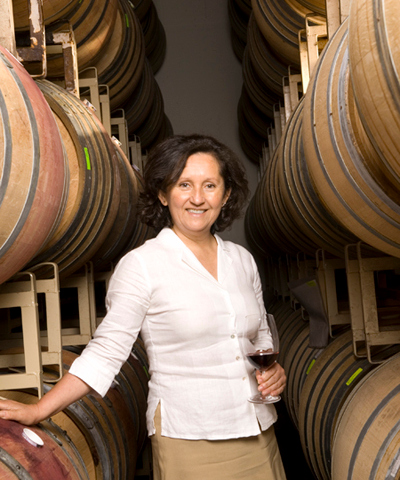
Amelia Ceja (Courtesy Ceja Vineyards)

Amelia Ceja (Courtesy Ceja Vineyards)

The Ceja Vineyards in Napa, Calif. have continuously flourished since Amelia Ceja took charge of the family wine production company in 1999 as the first Mexican-American woman vintner.She says the way they’ve been able to penetrate a really difficult market is the Latino way – with warmth, great food, great wine, and most recently, with social media.

The family-owned business has grown to produce about 10,000 cases of wine a year, and to owning more property in Napa and Sonoma. But it’s not all just about the wine. Ceja also opened a wine tasting salon, lounge and art gallery in downtown Napa. Visitors can enjoy wine and cheese while listening to Latin funk, salsa and appreciating the local art.

Ceja says she works around the clock to introduce people to her wines, and she is currently reaching out as far as China for distribution.

“We appeal to every demographic group because of the way we bring people in,” she says. “We have gone from vineyard workers to an award-winning business. If we’re not on hugging terms, we didn’t do our job.”

Ceja runs her business like a home; everyone is family. She wants her customers to feel at home and appreciate wine and food. If you’re not in Napa, you can share in the experience through videos on her blog, where she pairs Mexican food with wine.

“What I missed the most was the food,” says Ceja about her earliest memories of coming to the U.S. “The food here in the ‘60’s was atrocious. I took my thermos, because I wanted to eat warm food at school. I got my love of food from my grandmother.”

The Ceja Family (Courtesy Ceja Vineyards)

The Ceja Family (Courtesy Ceja Vineyards)

Her son Ariel now owns the restaurant Bistro Sabor, which serves many of the families recipes paired with Ceja wine. Her other son, Navek, studied digital arts and shoots most of their videos, more than 136 currently on YouTube with more than 180,000 views.

“My daughter, Dalia also loves to cook,” says Ceja. “We’re launching another site called Salud Napa which means cheers and health. I’m very interested in the diabetes and obesity epidemic in the Hispanic community. It’s very important to me that everything I prepare is healthy and nutritious.”

Ceja, who has been honored as “Business Woman of the Year” by the Sacramento Hispanic Chamber of Commerce and “The most outstanding female leader, innovator and visionary in the wine field in the North Bay” by North Bay Business Journal, says what she is most proud of is having three highly-successful children. She says they have been crucial asset to the company.

“It wasn’t because we urged them, but they all went away to college, and they all came back, and now indirectly they are working with us,” says Ceja. “It really enriches our brand because it is very important to take Ceja to the next level. They are contributing really great content and ideas in which to grow.”

Her daughter, Dalia, the director of sales and marketing of the family business, wants to pursue an executive MBA in the near future. Dalia followed in her mother’s footsteps and now maintains her own blog, while also continuing to write on the company’s blog several times a week.

Ceja is always moving. This month, she will travel to Michigan to be a keynote speaker at the Grand Rapids Chamber of Commerce. On February 22, she will be featured in the independent documentary Dreamland as one of 12 Californians who have made pioneering imprints on the state. The documentary will air on PBS.

Ceja says it’s been a lot easier for her kids than when she arrived in California from Jalisco,Mexico in the 1960’s. At 12 years old, she helped her migrant farm worker father pick grapes.However, her children don’t take anything for granted.

“They also follow our tradition of giving back,” says Ceja of her three children. “And that really comes from my parents.”

“I hope if they have children, they will transfer that. We have to leave this earth better than how we found it. Both our people and our planet. We’re building a legacy.”

And just in time for the Super Bowl, try this award-winning recipe for carne con chile that she prepares here for us.

As Ceja says, “Salud!”

Originally published on NBCLatino.com.
Holiday Recipes We Love: Peruvian Pork

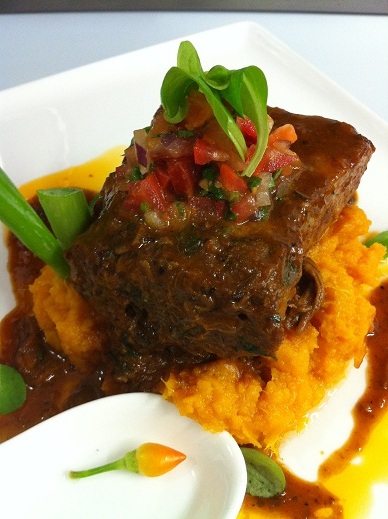
Surfish's "Peruvian Pork" (Photo/Chef Miguel Aguilar)

Surfish’s “Peruvian Pork” (Photo/Chef Miguel Aguilar)

A good roasted pork can find its way onto just about every Latin American Christmas dinner table. There’s the Cuban lechón, a whole pig marinated in citrus and garlic and cooked low-and-slow in a caja china. The Puerto Rican pernil, a juicy shoulder cut rubbed with garlic and herbs and oven roasted. And then there’s Peruvian pork, flavored with aji panca, a unique chile virtually unknown outside of the Andean region. Smokey, sweet and fruity all at once, the heat from this chile is precisely what makes Peruvian pork—well—Peruvian. We asked 43-year-old Lima-born Chef Miguel Aguilar, winner of the Food Network’s “Chopped” competition last summer and owner of Brooklyn’s Surfish restaurant, to share his recipe. Aside from the aji panca, Aguilar also uses soy sauce. “Peruvian food has a lot of fusion,” he says. “It has no barriers.”

Aguilar serves his Peruvian pork, pictured above, on a bed of mashed sweet potatoes and tops it with fresh salsa.

Peruvian Pork

10-pound pork shoulder
15 whole cloves of fresh garlic
1 big red onion cut in large pieces
15 ounces aji panca paste
2 quarts chicken stock
3 cinnamon sticks
1/2 cup of soy sauce

1. Preheat the oven to 375 degrees.

2. Place the pork skin side up in a large roasting pan, and pour the chicken stock over it.

3. In a blender, puree the garlic, onion, aji panca paste and soy sauce for about a minute, or until pasty. Add a little of the chicken stock to the puree to make it pourable, and pour over the pork.

4. Add the cinnamon sticks to the liquid and season with salt and pepper to taste. Cover the roasting pan with aluminum foil and cook in the oven for 3 1/2 hours. No basting is needed. Remove from oven when internal temperature reaches 165, and allow to rest for 15 minutes before cutting.

5. To serve, place individual slices of pork on a bed of sweet potato puree, drizzle with the pork juices from the roasting pan, and garnish with freshly made salsa.

Originally published on NBCLatino.com.

Cocktail: Pisco for the holidays

WhiteChristmas

Move over tequila and rum, pisco has arrived in the U.S., and it looks like it is here to stay. Learn how to make this special drink for the holidays.

Pisco, which means “little bird” in the Quechua language, is a clear distilled liquor made from grapes and named after the town of Pisco, located on the coast of Peru.

This heavenly drink is the fastest-growing spirit in the U.S. In 2010, pisco imports and sales grew an astounding 101 percent, according to the Comisión Nacional del Pisco in Peru. Within the past three years, more than a dozen different brands of Peruvian pisco have become available in the U.S.

This year, award-winning and world-respected pisco judge, television personality, chef and restaurateur, Johnny Schuler has begun to distribute his record breaking medal-winning brand, Pisco Portón, to 27 markets in the U.S., including Houston, Los Angeles, New York, and San Francisco. Schuler describes good pisco as having a flavor more complex than a vodka and more subtle than a tequila.

“It is excellent for creating defining cocktails, as well as for savoring neat or as an apertif,” he says.

For Schuler, everything is about having a fully enjoyable experience. And as he wanted NBC Latino readers to have an unforgettable and beautiful pisco drink for the holidays, he excitedly invented a holiday cocktail just for us while visiting Nuela in New York City. He recommends drinking it while listening to Bing Crosby or Michael Bublé, and preferably while snowing outside.

Enjoy!

White Christmas

1.5 oz. Godiva chocolate liqueor
1.5. oz. Pisco Portón
1 oz. heavy cream
1 teaspoon sugar
1 muddled Brazil nut
cinnamon

Shake chocolate liqueor, pisco and heavy cream in a shaker and pour in a martini glass. In a separate shaker, shake sugar, .5 oz. of heavy cream and Brazil nut. When this mixture gets heavy, pour on a spoon to create a layer on top. Garnish with cinnamon.

Originally published on NBCLatino.com.
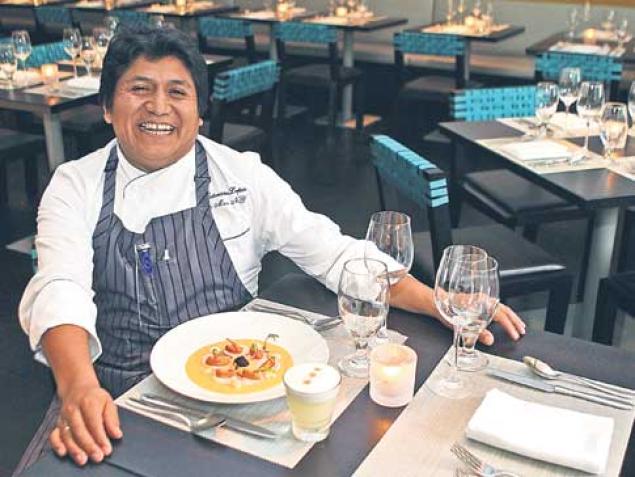
Peruvian chef has a full plate at new La Mar

Victoriano López, executive chef of La Mar Cebicheria Peruana (Photo/Kristina Puga)

Victoriano López, executive chef of La Mar Cebicheria Peruana (Photo/Kristina Puga)

“Don’t use those plates,” says Victoriano López, the executive chef of the recently opened La Mar Cebicheria Peruana, to one of his 20 line chefs, as he calmly reminds his new international team that they have new white plates from France and Germany.

“This is one of the details that differentiates us from La Mar in Lima,” the small-framed López says of the china.

Fans of Peruvian food have been eagerly awaiting the arrival of a Gastón Acurio restaurant in the city, so their hope is that not much else is different from the acclaimed original.

New York‘s La Mar opened two weeks ago in the high-ceilinged former home of Tabla at 11 Madison Ave.

Originally from the Ancash region of Peru, López says that he became aware of Acurio almost two decades ago while watching one of the first of his many TV cooking programs.

After being mesmerized by the variety of plates and ingredients and trying to learn the innovative Peruvian recipes he saw Acurio and his wife, Astrid, create on the tube, he went to the couple’s flagship restaurant in Lima, Astrid y Gastón, to meet his hero.

“He asked me how do you know me?” recalls López in his native Spanish. “He gave me a job as his assistant one week later. He has helped me so much – not only in learning about the kitchen, but like a father, because my parents didn’t have the economic means to help me. I am so grateful to him.”

Now López, 40, who never had formal culinary school training has been trusted with leading the kitchen at Acurio’s 29th restaurant worldwide – his first on the U.S. East Coast.

“The advice I can give Victoriano is to be himself,” Acurio said via e-mail of the chef he’s worked with for 17 years. “He has a big heart, talent, ability and overflows with modesty.”

López had to leave his family in Peru while their visas are processed, is living outside of his homeland for the first time and is working from 8 a.m. to 1 a.m. – but he doesn’t seem to mind.

“We spend about 18 hours together every day,” laughs Luis Jaramillo, his Ecuadoran sous-chef, who was previously at One If by Land, Two If by Sea in the West Village. “I was always inspired by Gastón … but now I am inspired by Victoriano.”

López says he doesn’t have a favorite dish on the La Mar menu, where prices range from $12 to $39 for appetizers and entrées.

But eight of La Mar’s famous ceviches are on the menu, including Elegance, a lime-drenched and slightly spicy warm-water fluke with red onions, Peruvian corn and little yam balls, and Lopez’s specialty, Maine lobster grilled over corn husks and drowned in a tangy ceviche sauce.

While López waits for his wife and three school-age kids to join him in New York, he also dreams about opening his own restaurant one day.

“I teach the philosophy of Gastón, passion for the kitchen,” he says. “We have no secrets.”

Originally published in the NY Daily News.

Three chefs update Argentine fare at Azul

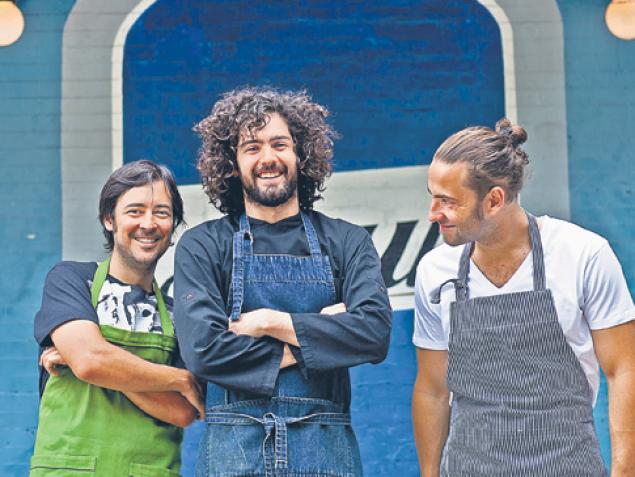
The new culinary team at Azul: Hernán Simesen (l.), head chef Nicolás López (c.) and Matías Romano

The new culinary team at Azul: Hernán Simesen (l.), head chef Nicolás López (c.) and Matías Romano (Photo/Erika Rojas)

For empanadas, skirt steak and the meat fiesta known as parrillada, there are plenty of options among the many reliable Argentine restaurants in the city.

But as any recent Buenos Aires traveler knows, the culinary offerings from the southern end of the Americas are much broader and diverse.

“I want to explain to Americans that Argentinean cuisine is a lot more than just parrillada and wine,” says Stefano Villa, the owner of Azul, a cozy restaurant with blue-washed brick walls at the corner of Stanton and Suffolk Sts. on the lower East Side.

Azul is marking its 10th anniversary by reinventing its once-traditional Argentine menu, bringing in other staples from the countryside – from wild boar to venison – and cooking them with a contemporary twist.

The revolution started one evening a year ago when a young man with long, dark curly hair and a multitude of questions came to have dinner with his girlfriend.

A few days later, the enigmatic diner, Nicolás López, returned with his résumé in hand. Only 27 and originally from Salta in northwestern Argentina, López already had almost a decade of cooking experience in South America. His last job had been as head chef in the restaurant of the Argentine embassy in CaracasVenezuela.

“I put him in charge very fast,” says Villa. “He does the job New York-style. He gives you no time to think.”

The Italian-born Villa, who also owns Industria Argentina and is a partner in Novecento, two other Argentine eateries, opened Azul in December 2001 after traveling in Argentina and falling in love with the country’s cuisine.

His new chef’s next move was to recruit two more chefs back home with fresh ideas for his revolution: A former cooking school classmate, Hernán Simesen, 27, also from Salta, who worked with chef Fernando Trocca at Sucre – a top-tier restaurant in Buenos Aires – and a friend of a friend, Matías Romano, 28, from Buenos Aires, who was mentored by an Argentinian TV cooking show personality, Juliana López May.

“The concept that the three of us have is to feel pride in Argentina,” says López, who finished putting his team together last month. “We simply work with our ideas mixed with the recipes of our aunts and grandmothers.”

The new chefs bring elements from all different parts of this area. There are red and blue potatoes and quinoa from the Andes and wild boar and venison from Patagonia. There’s also seafood, like sea bass from the Falkland Islands and South American king crab, known as centolla.

Dishes include López’s favorite: braised lamb tongue, rabbit confit served with an apple slaw, venison carpaccio and boar with quince sauce.

The restaurant has not only revamped its menu and website, but has been airing the Copa America soccer games and is participating in NYC Restaurant Week, both going on through July 24.

Despite all the changes, Villa says plenty of traditional beef remains on the menu, along with a a wide variety of Argentine wines.

“We are only adding recipes,” he explains.

Originally published in the NY Daily News.

“Scarface” actor on why he changed his Latino name to “Steven Bauer”

Steven Bauer at Veselka in NYC in April 2011. (Photo/Kristina Puga)

Steven Bauer at Veselka in NYC in April 2011. (Photo/Kristina Puga)

At 54-years-old, Steven Bauer is as tall and good-looking as he was when he played “Manolo” in “Scarface” almost 30 years ago, but broader with a few added extra pounds, and his honey complexion slightly weathered. With his involuntary exuberant charm, and warm smile, the need melts away for any apology for being late to our brunch at Veselka in NYC.

“I was playing music last night with my son till really late in the Bowery,” he says.

Making sure to say “hi” to the two little kids at the adjacent table first, he then turns his attention to me. Although not currently married, he makes it known immediately that he is a family man, as something innately reminds him to make a quick, but heartfelt call in perfect Spanish to his father in Miami.

“Feliz cumpleaňos Papi!,” he says with his huge smile again, as he affectionately chit chats with his newly turned 80-year-old father.

Bauer has been in New York for the past week shooting the independent film, ‘Knuckleheads’, produced and directed by David Karges and written by Jaime Zevallos, set to release to film festivals this fall. In between filming, he also makes time to visit his two sons – the eldest (his son with first wife Melanie Griffith) a musician, and the younger a musical theater actor.

In two days, he’s off to Albuquerque to film some scenes for the cable series “Breaking Bad” on AMC, before he’s back to his home base in Hollywood, Calif.

According to the 2010 Census data, there are 12 million Hispanics between the ages of 20-24 today, and there will be an expected 30 million by 2050. What was it like starting out as a Latino actor in the U.S. in the 1970’s, and how do you think it has changed today?
When I was starting out as an actor, it was a very small restricted area for anyone with foreign names. Hollywood was famous for having people change their identities. When I started, Latinos were not counted. There were a lot of Latino art organizations that created theater and art programs, but for themselves.

The bilingual PBS sitcom, ‘¿Qué Pasa, USA?’, became popular because of the need in Miami. There were a lot of Latino kids in the public school district. I was 19, going to the University of Miami – I used to get lots of fan mail for it. One of the creators was my professor, Manny Mendoza. He wrote the grant to produce it. It was aimed as a language tool for bilingual education for kids and adults – kids who are Americanized, parents starting over, and grandparents living in the house too, but it’s too late for them to learn English. The show took off because it related to anyone who grew up in a three generation household – in New Jersey, California, Texas – anywhere there were Latinos.

In the 1960’s, my generation came to the U.S. I was so desperate to be an American that I didn’t hang with Cubans. I don’t dance salsa. When I was 13 and 14, I was playing Beatles, Stones, Bob Dylan and Sinatra…classical music, too, which made me a nerd to a lot of my friends.

The new generation can embrace both cultures. We weren’t allowed to. Nowadays, they can meet other Latinos, but that can be a fault because they never have to learn English.
You have to learn English – you have to make an effort. You can retain your culture, but learn the language of the land. Any ethnocentricity is wrong.

Today, there are more Latino roles, and they have gone way beyond the gang member or janitors of the piece. Now there are military heroes, mayors, and politicians.

Named Esteban Ernesto Echevarría Samson at birth, you used to be credited as Rocky Echevarría when you first started acting. What made you change your name to Steven Bauer?
Rocky was a gimmicky name. When I became an adult, it didn’t feel real, and no one could pronounce Echevarría. Thirty years later, people can attempt it, but it’s not Garcia or Perez. It was my father’s idea to use my mom’s German side, which is Bauer. In the early days, it also eliminated the problem of “he’s Latino”.

What do you love about acting? 
It lets me experience life that I might otherwise not experience. By taking on a character, you are already taking on a behavior that is not your own. I like to play characters that I haven’t experienced so that I can experience life that I don’t know. That’s fun. For me, it’s very therapeutic.

What was your favorite role and why?
My favorite role so far…’Scarface’ was very fun. EXHILARATING actually – working with Al Pacino. I also enjoyed the role of the young Israeli I played in ‘Sword of Gideon’ (1986), and more recently in ‘Session’ that’s coming out this year with Bar Refaeli.

My role as Manny in ‘Knuckleheads’ is one of my favorite roles I’ve ever played because it’s emotionally satisfying. I play a man trying to get on with his life when he feels there is nothing worth living for. My work in this film is as good as I’ve ever done. It has given me an opportunity to show my many colors.

Jaime Zevallos, the writer of the film, also co-stars with me. He told me that when he wrote the script, he had me in mind to play the role. I think it’s going to speak to a lot of hurting people. It’s not a Latino movie – it goes beyond any ethnic identity. It’s about hurt and healing – with a sense of humor.

Favorite place?
Miami. So many great memories there and the climate; my parents and my culture is there. I love Cuban culture. Even though I was only three-years-old when I came to the U.S., I retain a love and loyalty for where I came from.

As we leave, he makes sure to tell me to follow him on Twitter. I’m “thestevenbauer,” he says.

Originally published in AOL Latino.

Andres Carne de Tres Brings Colombia to Queens

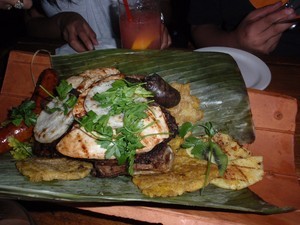
Parrillada from Andres Carne de Tres (Photo/Kristina Puga)

Tejarrilla Andres from Colombia restaurant Andres Carne de Tres (Photo/Kristina Puga)

With a location in Chia, and one in Bogota, Andres Carne de Res is one of the hottest spots in Colombia, because you can get there for a late lunch and stay all night for dancing, drinking and eating. It’s like a fun house for adults. Now you can partake in the same Colombian-style party, just a short car ride away, in the Andres Carne de Tres that opened just two months ago in Woodside.

Just like the restaurants in Colombia, the Queens version of Andres Carne de Tres offers music on Friday and Saturday nights – a live band, and then a DJ starting at midnight – so you can have dinner with your family and friends, and then dance until 4am. The restaurant looks like a spacious wooden cabin with a tropical feel, transporting you to another place that is not New York – something like a Latin Key West.

The friendly bartender mixes a variety of perfect for summer tropical-tasting libations, including frozen margaritas, mojitos, and the sometimes hard-to-find Brazilian caipirinha. The house drink is the coconuty Andres Hawaian. These drinks are not only refreshingly tasty, and keep you wanting more, but they are also topped with oranges or other fresh fruits. The prices for all mixed drinks range from $8 to $10.

The menu offers generous-portioned appetizers and salads ranging in price from $7 to $9 such as, guacamole with fried green plantains and camarones al ajillo (shrimp in creamy garlic sauce). Entrees like skirt steak marinated in the house special beer dressing, and T-Bone steak marinated in becerrito sauce, range in price from $15 to $25, and are served with two sides.

It is fun to share the giant-sized specials like Tejarrilla Andres (steak, chicken, pork ribs, chorizo, black sausage, fried green plantains, and baby yellow potatoes), and Paella Marinera (for two).

A first-time customer said he wanted to spend the whole summer here, because the restaurant’s large and welcoming porch reminded him of his home country, Colombia, even though it only overlooks the free parking lot of the restaurant.

This is a very convenient for those with a car, but beware if you are taking the train, as it’s a 15-minute walk from the 61st St. stop off the 7 train.

Take advantage of the free margaritas and $10 pitchers of beer every Friday from 11pm – midnight through July 31st.

Andres Carne de Tres is located at 51-05 58th St. Woodside, and is open daily, 11am – 11pm. It stays open till 4am on Friday and Saturday nights for dancing to Latin favorites such as, salsa, reggaeton, bachata, cumbia, rock, and more.

Originally published on Examiner.com.