Latina Leaders: From undocumented MIT student to satellite engineer

Diana V. Albarrán Chicas (Photo/Susie Condon)

Diana V. Albarrán Chicas (Photo/Susie Condon)

Diana Albarrán Chicas still remembers waking up at four in the morning to accompany her parents to their job picking strawberries in the fields. It wasn’t easy, she says, growing up undocumented throughout her school career. But she eventually made it to the prestigiousMassachusetts Institute of Technology (MIT) — a school she never heard of before her school counselor urged her to apply.

At 31, Albarrán Chicas is the first Latina, and only the second woman, to be a test section manager at the 50-year-old company, Space Systems/Loral (SSL) in Palo Alto, Calif. She oversees a team of 10 who design and build satellites and space systems for a wide variety of government and commercial customers, including DirectTV and DishNetwork.

“During one of the summer programs I attended as a Junior in high school, I learned about engineering and what engineers did,” says Albarrán Chicas, who originally dreamed of being an architect so she could build her own house when she immigrated with her parents from Mexicoat age 5. “I started to learn more and realized what I really wanted to do was engineering.”

If it wasn’t for that summer program, she says she wouldn’t have known careers in engineering existed.

“My parents only finished third grade in Mexico,” says Albarrán Chicas, who was the first in her family to graduate from high school, let alone make it to college. “I didn’t know about MIT until two weeks before the deadline to apply.”

At age 17, she packed up her bags and moved from Riverside, California to Cambridge, Massachusetts to take college courses in electrical engineering and electromagnetic wave theory.

“What I do now is work at the antennae department,” says Albarrán Chicas. “Through the antennae we are able to design how the satellites are going to define coverage on earth.”

She explains that satellites are launched into space and travel with the earth, linked with ground stations on the earth.

“That’s how the satellite communicates back and forth,” says Albarrán Chicas, explaining the full cost to test and launch a satellite is $500 million. “Once we launch our satellites into space, we can’t really fix them. We have to make sure they are designed properly and tested adequately.”

What she says she really enjoys about her job is the ability to be a problem solver. She says she is still is in awe that she is able to work with such a talented team and do such important work.

“It feels great to be able to come in and break some of the stereotypes that Latinas are not good in math and science,” says Albarrán Chicas.  Together with her husband (they met while students at MIT) they saw the need to introduce more young people to science, technology, engineering, math and science (STEM).   The couple created Empower Educational Services last year. “We’re trying to pay it forward in terms of everything we’ve learned — especially in under-served communities.”

She also works with Latinas in STEM, created by a group of MIT alumnae.

“The main purpose is to help empower Latinas to pursue STEM fields and thrive,” she says.  There’s a big push in improving the numbers, but there’s also a big trend in Latinas leaving STEM. We want to address why they leave – and raise awareness of Latinos who are doing well.”

Personally, she thinks immigration reform is definitely needed because there are too many talented undocumented youth in this country with so much to offer.

“It’s such a sensitive topic, because it could have as easily been me not being a citizen, and I can’t imagine not doing what I’m doing because of not having legal status,” says Albarrán Chicas who became a citizen at 21, when her parents were able to get their residency card and petition for her. “Ten years ago, there weren’t any scholarships for people who were undocumented. It was something that you didn’t talk about.”

She says sometimes remembering that time is still so difficult.

“There were some very dark moments — living in hiding for a long time, not saying anything to anybody,” she says. “My parents have been my source of inspiration — everything they sacrificed for my brother and I, I don’t think I can ever repay that back.”

Originally published on NBCLatino.com

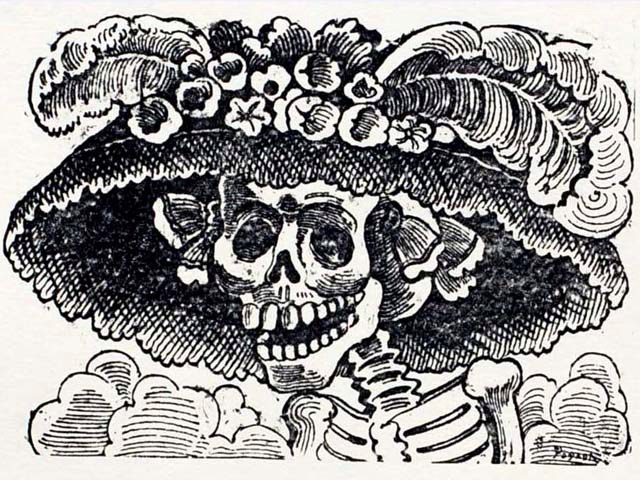
Who is the artist behind Mexican skeletons and “La Catrina”?

José Guadalupe Posada’s “La Catrina.” (Courtesy New World Prints Collection)

José Guadalupe Posada’s “La Catrina.” (Courtesy New World Prints Collection)

Ever wonder who was responsible for “La Catrina” and the skeleton figures which are a part of traditional Mexican culture, and are growing more popular worldwide?

The man behind the famous bony cadavers and skulls is Mexican illustrator José Guadalupe Posada.

As part of the 22nd Annual San José Mexican Heritage and Mariachi Festival, San José’s Mexican Consulate is celebrating Posada’s legacy with “El Centenario Posada 2013.”  The free exhibition, which also features the work of artists from the U.S. and Mexico who have been influenced by Posada’s work, opens September 13 and will last through December 30.  More importantly, it marks the 100-year anniversary of his death.

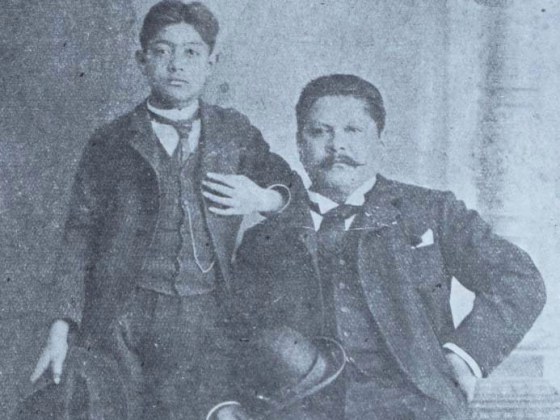
José Guadalupe Posada (right) with his son (left). (Courtesy New World Prints Collection)

José Guadalupe Posada (right) with his son (left). (Courtesy New World Prints Collection)

Known as the “printmaker to the Mexican people,” Posada’s thousands of illustrations ranged from political cartoons to religious art that captured the time in which he lived. Posada’s influence can now be seen internationally, especially in the Day of the Dead imagery he popularized after his death, as well as in illustrations for liberation during World War II, Lucha Libre, and the Grateful Dead.

Sadly, Posada died without an awareness of the influence he would have in the modern art world. He died in obscurity and in poverty and left no descendants.

“‘La Catrina’ we think was created in 1912 — the year before he died,” says curator Jim Nikas, who 70 selected works of 2,300 from the New World Prints Collection for the exhibition. “He would be a graphic artist today — somebody available for hire — that’s what he was in those days.”

Nikas explains that most of Posada’s illustrations were published by the Mexico City press of Antonio Vanegas Arroyo. As a lithographer, Posada made stone and lead engravings which he sketched first.  He then used a chemical process for his final touch.

“Arroyo could use the printing blocks over and over for different stories that he wanted to write or poems of people they knew who had died,” says Nikas.

Nikas likens Posada to icons like Elvis Presley and Janis Joplin.

“The more we look at the work of Posada, we feel the energy of his genius and the collective total of his work gets magnified over time,” he says. “He used the power of the image to change public opinion and to be used in social movements, be it for human rights, or to expose corruption…That’s something that Posada has given to us.”

Nikas and his wife, Maryanne Brady, are also working on a documentary about the artist which is expected to be completed in time for Day of the Dead.

“Skeletons soften the pain of death — people get used to the idea we’re all going into a whole pile of bones and maybe it’s not so terrible after a while,” says Nikas about how he got interested in researching the Mexican artist. “It’s crept into the culture of the U.S. and in Europe.”

Originally published on NBCLatino.com.

Arizona’s newly appointed first poet laureate talks life on the border

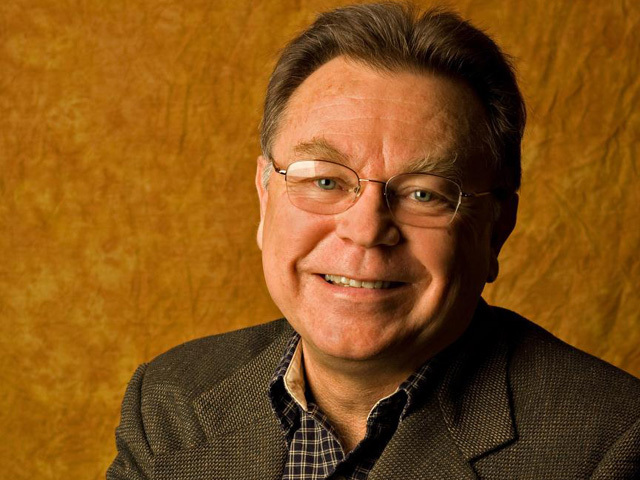
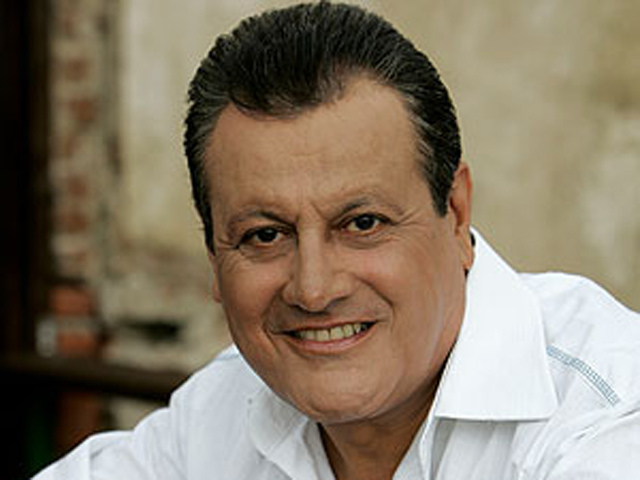
Alberto Rios, Arizona’s newly appointed first poet laureate. (Photo/Tom Story/Arizona State University)

Alberto Rios, Arizona’s newly appointed first poet laureate. (Photo/Tom Story/Arizona State University)

Renowned poet and professor Alberto Rios has recently been selected by Governor Jan Brewer and Arizona’s Commission on the Arts as the state’s first poet laureate.

“It’s been a wild ride so far,” says Rios about his life, ever since he got a call from the Governor’s office last week informing him of his new appointment. “It was a special feeling…I grew up in Arizona — on the border — so to be a kid from Nogales, in a state that has so many issues regarding language, and so many things — it’s a pretty good story.”

Rios, has published a total of 10 poetry books, three story books and a memoir called “Capirotada.” His memoir about his youth along the Mexico-Arizona border won the Latino Literacy Hall of Fame Award, and he has also received many other recognitions for his work, including the Walt Whitman Award in Poetry. As English professor at his alma mater, Arizona State University, he reached the highest faculty rank when he was named Regent in 1989, and his work is often taught in college curricula.

“Being a professor, I have a lot to say about who we are, and why are we here,” says Rios, 61. “If it’s so bad, why don’t we all leave, but there’s lots of reasons why we don’t.”

Arizona became the 43rd state to establish a poet laureate, last year, in honor of its centennial year of statehood. The purpose of this position, according to Governor Brewer, is to “commemorate Arizona literary artists whose work and service best represent Arizona’s values, independence and unique Western history and culture.”

Probably few know Arizona’s history and culture better than bicultural Rios – son of a Mexican father and an English mother. Recounting his parents’ love story, he says his father ran away from his home in Chiapas, at age 14 to join the U.S. Army. Eventually, he got a GED and became a staff sergeant and ended up in England, during World War II, where he met his future bride. When he got discharged, he was given no choice but to return to the U.S., and Rios’ mom followed him. They ended up in Nogales.

“Growing up, I had cultures in my house that I wouldn’t trade for anything,” says Rios explaining how they gave him two ways of looking at things and helped him become a writer. “I grew up with an open border.”

And speaking about the “real” border, he remembers the Arizona-Mexico border being more of an imaginary line than it is today.

“You didn’t need papers — the guards were reading newspapers — it wasn’t a big deal to cross the border,” says Rios, also explaining that he had kids in his class who paid tuition and crossed the border every day to go to school in the U.S. “Every holiday, whether Mexican or American, there was a parade.”

Rios says he also remembers, as if it were yesterday, when everything changed.

“It was November 22, 1963 — when President John F. Kennedy was shot,” says Rios, who was in the 5th grade. “One of the first things the country did was close the borders.”

He says phone calls started coming in from parents in Mexico saying they couldn’t pick up their kids.

“I’ll never forget this,” says Rios. “One of the kids who got a phone call started to cry. Then other kids started crying…They had kids on one side of the border and parents on the other side of the border crying. It wasn’t until 4 or 5 in the morning they let the kids go through…For me, I think that’s when the border became something else.”

He says slowly the idyllic, bicultural world he knew became something else. The drug trade started, and people could no longer travel back and forth as easily.

“The border is an uneasy place — it’s more tense, it’s more mean,” says Rios, whose wife is a retired librarian and whose son is an immigration rights attorney.

As poet laureate, he wants to do his part to bring beauty back to the border.

“I absolutely want to talk about these issues – work I’ve been doing my entire life. I’ve always traveled all over the state visiting schools and libraries telling the stories of people’s lives and what this all means,” says Rios. “I try to bring the human side to it all.”

Arizona’s new poet laureate is also working on a public art project and is in the midst of publishing a new poetry book.

“It’s about the southwest,” says Rios. “You have to start somewhere.”

Originally published on NBCLatino.com.

Lucha Libre celebrates its 80th anniversary taking a bite of the Big Apple

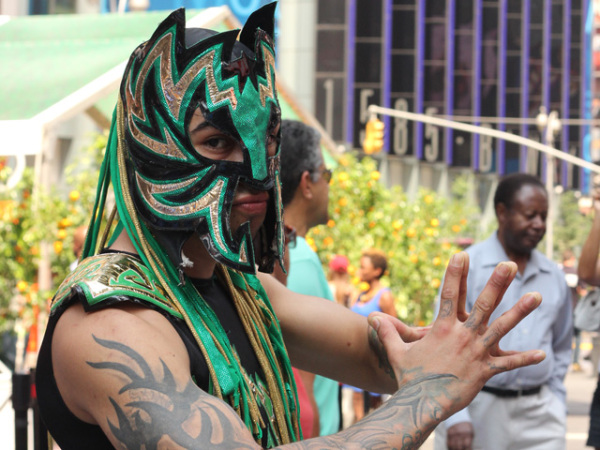
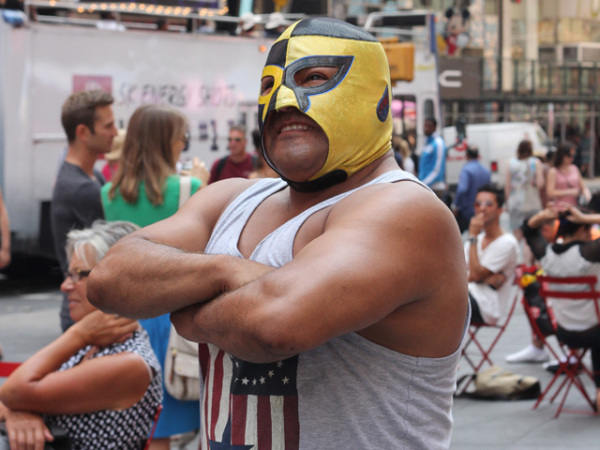
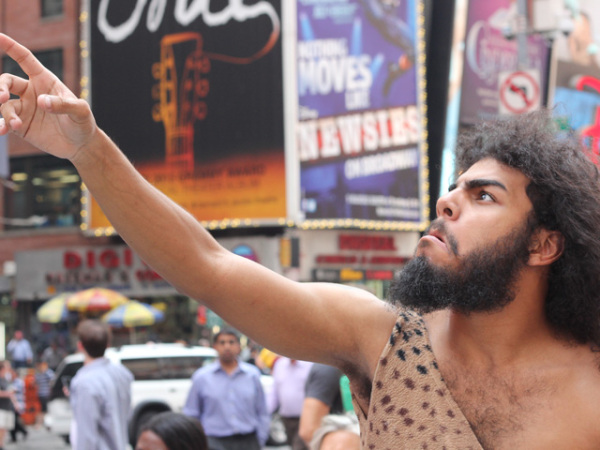
Luchadores in New York City on August 21, 2013. Pequeño Pierroth (left), Caveman (center) and Mascara Celestial (right). (Photo/Kristina Puga)

Luchadores in New York City on August 21, 2013. Pequeño Pierroth (left), Caveman (center) and Mascara Celestial (right). (Photo/Kristina Puga)

You may or may not know that the traditional masked Mexican wrestling sport, Lucha Libre, has had a long-time presence in the U.S. in its nearly 80-year existence. It became more mainstream in the U.S. after the 2006 comedy “Nacho Libre,” starring Jack Black, and its presence is only growing. This year, a partnership was announced that will promote Lucha Libre AAA – Mexico‘s largest wrestling league – to the U.S. audience and possibly get a spot on El Rey, a new English-language Latino channel set to launch in January 2014.

This Saturday and Sunday, Javier Clorio, a Mexican-American communications professional originally from California, says he is excited to bring Lucha Libre to New York City in honor of the sport’s 80th anniversary. He raised $5,000 to bring 26 wrestlers from the U.S. and abroad – with secret identities behind their masks – to battle each other (“technicos”/good guys vs. “rudos”/bad guys) to become the star luchador of the Big Apple.

“People around the world recognize Lucha Libre — they go to stadiums, concerts and other events wearing Lucha Libre masks,” says Clorio. “I am also excited, because this event will benefit the East Harlem Business Capital Corporation — they help people accomplish their dream of having their own business by helping them with their business plan…I know currentHispanic business owners who have capitalized from the EHBCC, and I am glad that by doing this event we are raising funds so more people can accomplish their dreams.”

Máscara Celestial (Photo/Kristina Puga)

Máscara Celestial (Photo/Kristina Puga)

The 23-year-old luchador who goes by the name Máscara Celestial is accomplishing his childhood dream of becoming a professional luchador. Originally from Mexico City, he says his parents didn’t believe him when he would tell them he wanted to be a luchador when he grew up, but he’s been practicing since he was 15. Two years ago, he moved to New York to challenge himself to a higher level.

“Life in the U.S. is not easy,” says Máscara Celestial, who works 12 hours per day at Kennedy Fried Chicken and trains in the gym for three to four hours every morning, with only one day off from work to compete. “I haven’t slept for the past three days, but I don’t want to remain stagnant. I want to excel as a luchador.”

He explains he wants his good guy character, Máscara Celestial (“heavenly mask”), to develop a great story line, until his body can’t take it anymore.

“I love my character — a good character in a very difficult world,” he says.

Pequeño Pierroth (Photo/Kristina Puga)

Pequeño Pierroth (Photo/Kristina Puga)

Pequeño Pierroth says when a luchador puts on his mask, he is also putting on his alter ego identity. He was born and still lives in Mexico City, but in Lucha Libre world, he plays a Puerto Rican. His job as a “rudo” is to get the audience riled up.

“I tell them, ‘Why are you proud to be Mexican if you are dying of hunger?” says Pequeño Pierroth, named the diminutive form of a famous Mexican luchador – Pierroth. “Some people really get angry for real.”

He has 21 years of experience in the ring — a few months of which were with the WWE.

“When I was a boy, I was the little one and other kids would bully me,” says Pequeño Pierroth, who was also poor as a kid, selling candy and singing on corners to help support his family. “Now I travel to Madrid, London, Denver, Chicago and Philadelphia…I’m not rich, but I’m stable and happy. I love Lucha Libre — maybe more than my wife.”

Caveman (Photo/Kristina Puga)

Caveman (Photo/Kristina Puga)

Caveman is a 20-year-old Puerto Rican from New York. He trains with a Dominican coach at the Bronx Wrestling Federation.

“When I was growing up, my brother and family watched wrestling faithfully,” he says. “Going into high school, I met a girl and she broke my heart. I went through a depressed phase and almost committed suicide.”

His low self-esteem at the time transformed the shy and timid youth into the Caveman today. He says he let his beard and hair grow, forming his version of a mask. He had the urge to become a hermit, but his wrestling coach made him a Caveman outfit and urged him to keep wrestling as the Caveman persona. Today, he says he easily transforms into his character, pretending to pick bugs out of people’s hair and acting surprised whenever he sees a modern object — the most important thing to him he says is to make his fans happy.

“Now professional wrestling is my life,” he says, although he still doesn’t get paid for it. That’s a privilege that comes once your name becomes known in the Lucha Libre world. “I’ve dropped a lot of things because of wrestling, because it saved my life…I’m actually living my dream.”

Originally published on NBCLatino.com.

Farm policies should support growing more fruits and vegetables, says study

(Shoppers buy vegetables at a local Farmers Market in Annandale, Virginia, August 8, 2013. Photo: AFP Photo/Paul J. Richards/Getty Images )

(Shoppers buy vegetables at a local Farmers Market in Annandale, Virginia, August 8, 2013. Photo: AFP Photo/Paul J. Richards/Getty Images )

The Union of Concerned Scientists (UCS) recently released a report stating that eating right not only makes sense for our health but for our pockets. It found that if Americans ate the full two cups of fruit and 2.5 cups of vegetables recommended by the U.S. Department of Agriculture (USDA), we could prevent 127,261 such deaths each year from cardiovascular diseases and save $17 billion in medical costs. The economic value of the lives saved from cardiovascular diseases is $11 trillion.

Dr. Ricardo Salvador, the senior scientist and director of the Food & Environment Program at UCS says although this news seems like great news, there is a huge problem that needs to be addressed first.

“We need to invest in crops that the USDA guidelines tell us we should eat more of — fruits and vegetables,” says Dr. Salvador.

USDAFigure1

Currently, he says the USDA and current farm policies offer few incentives to grow fruits and vegetables – discouraging the production of the very foods federal dietary guidelines recommend. Instead, these policies subsidize “commodity crops” such as corn and soybeans, which are used as feed for livestock and for processed food ingredients — some of it referred to as “junk food.”

“We pay once to a program that makes us sick, and then pay again to cure our diseases,” says Dr. Salvador, explaining these policies require taxpayers to pay for subsidizing commodity crops that become ingredients in unhealthy foods and again through tax dollars that fund Medicare and Medicaid to treat these costly diseases.

He says that these subsidies were meant in good will — to guarantee stable market prices for farmers — but since they these policies were put into place in the 1930’s, they need to be updated.

Although the USDA did not respond for a comment, Dr. Salvador says they do have a lot of programs in place we can benefit from, like “Know Your Farmer Know Your Food” and “My Plate,” which encourage Americans to eat more fresh fruits and vegetables.

“We’re just advocating for the USDA to be more consistent with their own recommendations,” says Dr. Salvador, urging the public to write to Congress to let them know taxpayers want greater access to a healthier food supply and to patronize local farmers markets. “An individual can make a difference, but policy will make the greatest impact.”

USDATable1

RELATED: The use of GMOs in our food supply – a look at the debate

Originally published on NBCLatino.com.

25 years of El Vez, the Chicano Elvis

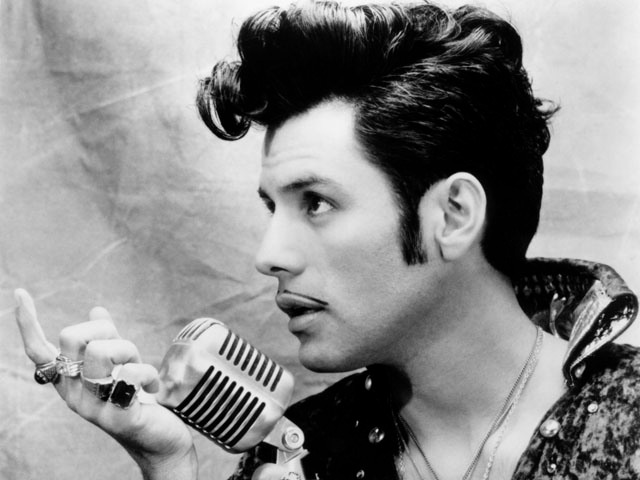
El Vez, aka Robert Lopez (Photo/Randall Michelson)

El Vez, aka Robert Lopez (Photo/Randall Michelson)

August 16, 1977 was the day the world lost its hip shaking, soulful singer with slicked black hair, sideburns and a quivering lip — Elvis Presley. But for the past 25 years, Robert Lopez — otherwise known as “El Vez” — has been resurrecting the rock and roll icon with a Mexican-American flair and sharing his songs worldwide with a political twist.

Since 1988, Lopez has been touring the U.S. and Europe singing Elvis songs, except he changed the lyrics to tell a different story and titles to “Viva la Raza,” instead of “Viva Las Vegas,” and “En el Barrio,” replacing “In the Ghetto.”

At 52, he is still touring and making new fans. He also added yoga to his schedule — as he says that’s the secret to maintaining himself “Elvis size.”

“I’ve been on the road every week since April — San Francisco, Los Angeles, Arizona, Texas, the East Coast, Chicago, Italy, Spain, Virginia, Australia, and San Diego this weekend,” says Lopez.

In 2011, he was made part of the “American Sabor: Latinos in U.S. Popular Music” exhibit at The Smithsonian for taking the “Elvis-impersonation phenomenon and reinventing it into a cross-cultural live performance combining a love of Elvis with an impressive knowledge of popular music and a pro-Latino political agenda.” One of his gold suits is displayed in between of the memorabilia of the iconic Ritchie Valens and Celia Cruz.

“To be named at the same thing as Ritchie Valens,” says Lopez about one of his biggest inspirations, “I felt really proud.”

Lopez’ career impersonating “The King” started while working as a curator at an art gallery, La Luz De Jesús, on Melrose Avenue in Los Angeles.

“I curated a theme on Elvis Presley,” says Lopez. “I hired an Elvis impersonator, and he wasn’t very good. I started showing him what he should be doing, and I thought ‘I could be the Mexican Elvis.’”

Lopez says he was such a hit with the hardcore Elvis fans passing by the art gallery, they urged him to go to Elvis Tribute Week in Memphis. There, he competed in an Elvis impersonator contest, made it to the finals and the rest is history.

“I was listening to Elvis since I was a baby,” says the Chicano performer, who currently resides in Seattle and has a restaurant named after him in Philadelphia and one coming this fall to New York City. “When I was 16, I was moved by punk rock, but Elvis was the punk rock of ‘56…I knew I wasn’t a regular Elvis impersonator, I think my punk rock attitude made me feel I could do this and do it my way.”

One of the biggest hits, of his more than 20 albums — “Immigration Time” — talks about immigration to the tune of Elvis’ “Suspicious Minds.”

“It was the hot topic in ‘88, and it’s a sad thing that 25 years later nothing has changed,” says Lopez. “It just shows you that things don’t change, but no reason to stop trying. I go through different phases with my material — I reinterpret it — it’s gone through angrier versions and lighter versions…”

He says he likes to sing as a way to give tribute to Elvis but also to Latino culture.

“It is funny and it is political all at the same time in one song,” says Lopez. “I’ve always been doing music, but I’ve always loved the idea of parody. The best parody is when you really love the subject.”

Originally published on NBCLatino.com.

The use of GMOs in our food supply – a look at the debate

People hold signs during a demonstration against agribusiness giant Monsanto and genetically modified organisms (GMO) in front of the White House in Washington on May 25, 2013. (Photo/NICHOLAS KAMM/AFP/Getty Images)

People hold signs during a demonstration against agribusiness giant Monsanto and genetically modified organisms (GMO) in front of the White House in Washington on May 25, 2013. (Photo/NICHOLAS KAMM/AFP/Getty Images)

In the past two months alone, there have been international marches against Monsanto, which produces genetically modified seeds, in more than 400 cities, and the company has been named in several lawsuitsOccupy Monsanto is also gaining momentum for a large protest on September 17. On the other hand, others defend genetically modified crops as an answer to providing food for the world’s growing population.

NBC Latino decided to talk to scientists on both sides of the debate about biotech agriculture and the controversial genetically-modified organisms (GMOs) it produces.

“There have been lots of protests against Monsanto, because they sell their seed and want to make sure growers don’t use their own seed for a year,” says Dr. Juan Luis Jurat-Fuentes, a researcher at the Institute of Agriculture at the University of Tennessee who has been working on developing new types of transgenic crops since 1995. “Monsanto is just a company that has spent millions of dollars in research — I don’t think it’s wrong.”

After spending years studying how insects respond to insecticides and transgenic crops, he says he hasn’t seen any negative effects.

“The only negative thing I’ve seen is bugs that develop resistance to these transgenic plants,” he says. “The second thing that can happen is eliminating pests from the field opens up other pests to take their place.”

Currently, he says about 70 percent of corn in the U.S. and 80 percent of cotton is made in the transgenic variety.

Dr. Cecilia Chi-Ham is the director of science and technology at PIPRA — an organization started by the Rockefeller Foundation to make sure the latest technologies reach farmers in developing countries. The researcher agrees with Dr. Jurat-Fuentes that there is nothing dangerous about companies like Monsanto.

“I develop genetically modified crops and research the impact of genetically modified seeds on small farmers,” says Dr. Chi-Ham. “One our biggest challenges is that the world population is growing and we need to produce the same amount of food as before…that’s when technology like GM can be so important.”

She says many organizations such as, The Pontifical Academy of Science (the Vatican) and theAmerican Medical Association have also reached the conclusion that there is no harm in biotechnology. Instead, she feels it has only contributed to improving agriculture and health.

“There are many drugs that are made by using GM organisms — medications like for diabetes, for example,” says Dr. Chi-Ham. “Before, insulin was extracted from the pancreas of cows or pigs, which could cause some problems.”

Other researchers don’t agree and feel that GMOs pose health concerns as well as threaten the rights of small farmers.

Dr. Ignacio Chapela, a researcher at the University of California, Berkeley, has been an outspoken critic of UC Berkeley’s ties to the biotechnology industry for more than a decade. He’s also appeared in the documentaries “The World According to Monsanto” and “The Future of Food.”

Dr. Chapela pointed to studies showing that Bt toxins found in Monsanto crops damage red blood cells in humans, not only insects, and Dr. Chapela has been talking about the dangers of GM corn for years.

“For example, the corn produc[es] a toxin that kills insects [and] has serious consequences because it’s leaking that insecticide into the environment…through the roots,” said Dr. Chapela in a video. “A lot of that Bt toxin goes into the soil.”

Chapela also says GM seeds lead to crops becoming homogeneous, causing the loss of the diversity we need and require for the future survival of the crop.

“It’s not an exaggeration to say that it’s really world food sustainability that’s at stake,” said Dr. Chapela.

Dr. Ricardo Salvador, director of the food and environment program at the Union of Concerned Scientists, is also concerned about the monocrops being developed by biotech companies such as Monsanto.

“Through genetic modification, human beings have taken out lots of the characteristics of corn, which are not for human consumption,” says Dr. Salvador. “There’s a lot of people that argue that’s why we are developing huge food allergies and dietary diseases like Crohn’s disease.”

He explains that by changing the DNA of organisms, it’s harder to research the results. The assumption now, he says, is that GM seeds are safe unless there is evidence to the contrary.

“There is effectively no formal approval process for transgenic food crops…We need to produce more of the right stuff and less of the wrong stuff,” says Dr. Salvador, explaining we need healthier fruits and vegetables and less meat and grain — what is being produced now. “We need to do more research on that.”

He also says we need to take a closer look at where the GM products are really going.

“They are not going into the food supply or going to the hungry of the world, but to produce biofuel, fatten livestock, and to produce the raw ingredients for junk food,” says Dr. Salvador. “The market that is buying meat and biofuel is the wealthy of the world.”

As the use of GMOs increase, the debate continues between both sides of the issue.

Originally published on NBCLatino.com

Ismael Miranda, of the Fania All Stars, says the future of salsa is bright

Salsa singer Ismael Miranda (Courtesy Ismael Miranda)

Salsa singer Ismael Miranda (Courtesy Ismael Miranda)

Ismael Miranda used to be the one of the youngest members of the iconic 70′s salsa band, Fania All Stars. Now he’s one of the few left, with the passing of Celia Cruz and Hector Lavoe, but at 63, he’s still going strong. Starting his own rock and roll band at age 11, in New York City, he says he thinks he was born singing instead of crying.

“I am a soloist — I travel all over the world with different bands,” says Miranda, sounding as young and energetic as ever. “I perform all over the world.”

He says he recently started an international tour, celebrating his 45-year musical career until January. This weekend, he will be flying to Los Angeles from his home in Puerto Rico to join thousands of salsa lovers at the 15th Annual International LA Salsa Congress, featuring classic band members from Grupo Niche, El Gran Combo, and the band he joined more than four decades ago — Fania All Stars.

“I’ll be performing with Oscar Hernandez’ band on Saturday,” says Miranda, explaining that only he, Larry Harlow and Adalberto Santiago will be performing from the legendary All Stars. “It’s been a while since I’ve performed with Larry.”

He says Harlow now has his own band as well, but their history goes way back.

“When I started working with Larry, that’s when I started composing,” says Miranda, who was 19 when he joined Fania Records.

“We were together for about four years, and we did nine or eight albums. I was really grateful for that. He was a very important part of my career.”

He says it was because of Harlow discovering him that he was ever a part of Fania All Stars and of the 1972 film, “Our Latin Thing,” and got the role of Hector Lavoe’s father in “El Cantante” (2006).

He often recalls the memories of their international trips to Africa and Europe.

“We went all over the world,” says Miranda. “Fania is the most important band in the history of salsa music. Salsa is never going to stop. It’s been around all of our lives.”

Despite what others might think, he is adamant that the salsa genre is still as popular as ever.

“With the Salsa Congress, all the young people are dancing salsa in Europe, Asia, and in Central and South America,” says Miranda. “Everybody is dancing salsa in the United States. We are traveling all over the world, and there are millions of young people dancing — I think it’s on the upside — it’s one of the rhythms that’s most called for in the world.”

Jimmy Bosch, a younger trombonist who participated in several Fania sessions, and who will be performing with the band this Saturday, agrees.

“It’s hard to put a finger on what it was that made seventies salsa so special,” Jimmy Bosch, a younger trombonist who participated in several Fania sessions and will be performing with the band this Saturday, told Rolling Stone. “It was the times, too – everything that was going on socially and politically. People like me, who discovered that music then, we’ve never steered away from it.”

Miranda says there’s a lot of young performers to look out for such as, Victor Manuelle and Frankie Negron.

“Right now there’s like about 10 bands in South America,” he adds. “The music is not going to stop. There’s a lot of young guys, and they all do a good job.”

This is his third time performing at the Salsa Congress, and he says he’s excited to see his old friends and sing his favorite tunes, including “Maria Luisa,” “Asi se compone un son” and “No me diga que es muy tarde ya.”

And although, he’s nearing retirement age, he says he’s working more now than ever before.

“I started my own recording company,” says Miranda about IM Records. “I do my own booking in my own offices. I do my own albums and everything. I don’t have to retire — I’m still having a nice time.”

RELATED: LA Salsa Congress: From gang member to international salsa star

Originally published on NBCLatino.com.

10 immigrant entrepreneurs in the US

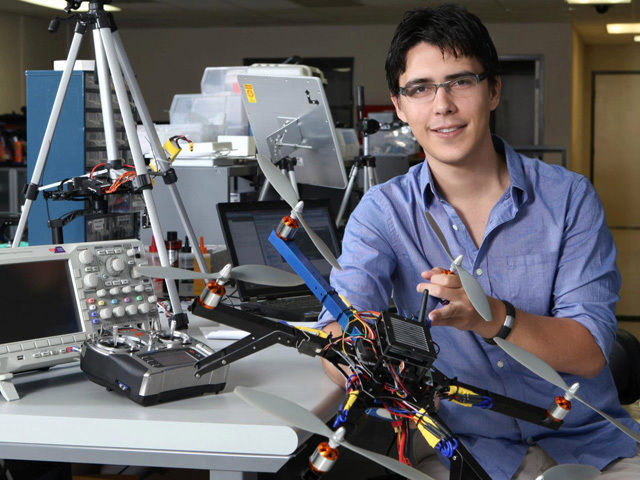
Jordi Muñoz with one of his drones. (Courtesy 3D Robotics)

Jordi Muñoz with one of his drones. (Courtesy 3D Robotics)

According to a new report, the Kaufman Index of Entrepreneurial Activity released by the Kaufman Foundation, immigrants were twice as likely to start businesses as native-born Americans in 2012. The number of new Latino entrepreneurs has also nearly doubled, from 10.5 percent to 19.5 percent since 1996. Here is just a sampling of some immigrant pioneers in various fields:

1. In 2012, Sofia Vergara became the highest-paid female actress on television at $19 million. But few may know that besides being a two-time Emmy-nominated actress, the immigrant from Colombia is also a very successful entrepreneur. She is the co-founder of a 16-year-old talent management company, Latin We, which made an estimated $27 million two years ago. She has a clothes line with Kmart, and just last month, she also launched The Nuevo Worldsocial network, which connects Spanish-speaking celebrities with their fans on social media. So far there are only seven celebrities hosting pages on the site, sharing personal blogs, videos and photos, but Vergara herself is enjoying the personal connection with her fans.

“I love keeping my fans up to date with everything I’m doing on Twitter,” Vergara, who hasmore than 4 million followers on Twitter, told Forbes. “I’ve been desperate for a social way get to know them better and to share with them in more detail what I’m interested in, and what I think they would be interested in – and to hear what they think!”

2. Cesar Millan, self-taught dog expert originally from Mexico, became a household name with his television series, “Dog Whisperer with Cesar Millan,” which was broadcast in more than 80 countries worldwide. Millan immigrated to the U.S. at 21 to train dogs. “I didn’t know I had something to offer…where I grew up, you grew up thinking that Americans knew everything,”he told NBC Latino. He says he jumped the border and was homeless for two months. That’s when he realized Americans were not connected to their dogs. He now has a new series, Leader of the Pack on Nat Geo Wild, and a new book, the “Short Guide to a Happy Dog.”

3. Beto Perez is the Chief Creative Officer and co-creator of Zumba back in the 1990s, and today has one the largest fitness empires in the world. When he was an aerobics instructor in his native Colombia, he forgot his usual exercise tapes, so he improvised with some salsa and merengue music he was carrying in his bag. And that’s how the exercise phenomenon was born, which incorporates hip-hop, soca, samba, salsa, merengue, mambo, martial arts, and some Bollywood and belly dance moves into a fitness routine. He moved to Miami, not knowing a word of English, and today Zumba Fitness, an organization that sells Zumba videos and products, has approximately 12 million followers taking weekly classes in at least 125 countries.

“Over the years, fitness became too complicated and difficult,” Perez told Reuters. “They forgot about normal people — mothers, grandmothers and the housewives who want to stay in shape and have some fun. That’s the essence of Zumba.”

4. Maria De Lourdes Sobrino is the woman behind the multi-award-winning, 31-year-old brand brand Lulu’s Desserts, which manufactures more than 45 ready-to-eat Mexican-inspired desserts, including rice pudding, gelatin and flan. It all started because she missed the ready-to-eat gelatin snack from her native Mexico. So in 1982, she founded her company, based on her mother’s recipe. Today, she says she has about 30 employees and sells her products in Walmart and grocery stores throughout California and Texas. She’s in the process of expanding her market to include the East Coast, Puerto Rico, and Mexico.

“I am proud to continue our service to our consumers — especially the Hispanic market,” says Sobrino, who was 29 when she started her business. “The contribution of Latinas is very important to the economy of our country. I wrote  “Thriving Latina Entrepreneurs in America”because a lot of people don’t understand we bring talent and ideas. We take a lot of risk. I brought capital from Mexico from selling property and savings.”

5. Marcelo Claure is the founder of Brightstar, a specialized wireless distributor and a leading global services company serving mobile device manufacturers, wireless operators and retailers. It is the largest Hispanic-owned business in the U.S., with a presence in approximately 40 countries, and was ranked #58 on Forbes 2012 List of America’s Largest Private Companies. Claure was born in Guatemala, moved to Morocco as an infant and spent his early youth in the Dominican Republic and his high school years in Bolivia. According to The Miami Herald, while passing through Boston in 1995, Claure went into a cellphone store to buy a phone, and by the time he walked out, he owned the store.

“The owner hated owning a retail store, was looking to get out, and said to me, ‘If I could find someone who wanted this store, I’d hand them the keys right now for nothing,’” Claure told The Miami Herald. “I told him I’d take it, and if the store made money, he’d get 49 percent of the profit.”

Within two years, Claure owned 150 stores in the Northeast and had set up a network of drivers who carried phones in their car trunks and delivered them to customers to make the purchase hassle-free. In 1997, he moved to Miami to launch Brightstar.

6. Jordi Muñoz is a 26-year-old immigrant from Tijuana who never finished his degree at the University of Mexico, but is now the president of a drone-making company called 3D Robotics Inc. He says he loved building things ever since he was a boy, and he learned to program micro-controllers by ripping off the sensors from his Wii and then programming the code to work with the sensors to make his toy helicopter fly. Then, he discovered a blog called DIY Drones, founded by former editor-in-chief of Wired, Chris Anderson, where he started posting his ideas in a forum on the blog. Anderson believed in his idea, loaned him $500, and soon after, 3D Robotics became a million-dollar company selling up to 80 to 200 packages a day at $500 to $2,000 each. Anderson even left his job to run the company with Muñoz.

““It’s amazing what you can do with $500,” says Muñoz who after three years, has approximately 70 employees in San Diego, Tijuana, and San Francisco. “The support here is incredible. In Mexico, nobody would send me a check like that. There are good people here who trust. You can start a business in your garage, a big corporation like Apple. You can really do it…The U.S. has a flexible mentality…There is no way you cannot be successful in the U.S. You only need to work hard.”

7. Carmen Castillo came to the U.S. from her native Spain with a student visa, and 20 years later she is the founder and owner of SDI International Corp. — a global technology services corporation which serves many Fortune 500 companies. Castillo wanted to own her own business ever since she was 6 years old and believes her success comes from her proactiveness. “We really have to figure out what’s going to be next,” she says in her bio. “The difference between us and most of our competitors is that we are truly global suppliers. You have to be a true global player to be able to hold and sustain a contract with a Fortune 100 company.”

8. Dr. Rafael Yuste immigrated to New York City from Madrid, Spain, 26 years ago, with two suitcases, a medical degree, and not knowing a single person. Today, the neuroscientist is not only a professor at Columbia University, where he leads a laboratory, he is also one of the six researchers to help launch the new decade-long scientific effort to examine the human brain and build a comprehensive map of its activity — a multi-billion-dollar project the Obamaadministration announced earlier this month.

“For me, one of the best things in my life was to come here,” says Dr. Yuste about the opportunity he’s had to develop his career as an American citizen. “I think the Brain Activity Map has been the demonstration that the U.S. is a beautiful country, because an idea that came out of a brainstorming session, in a year, makes it all the way to the State of the Union address of the president…it goes all the way up to transform the country — in this case, in science.”

9. Maria Contreras-Sweet, founder of PROAMÉRICA Bank in Los Angeles, came to the U.S. from Mexico with her mother and siblings at the young age of 5. According to Bloomberg Businessweek, while she was still a high school student and working in a jewelry store, she was approached to work for the speaker of the California Assembly. That opportunity broadened her horizons, and after getting her degree in political science, she opened the Contreras-Sweet Company, an international management consulting firm for Disney, Coca Cola, and the Getty Museum in Los Angeles, before she founded PROAMÉRICA Bank, a 7-year-old financial services provider for Latino entrepreneurs.

10. Adriana Ocampo was born in Colombia and raised in Argentina. She moved with her family to Los Angeles when she was a teenager, and she says the first words out of her mouth (in her native Spanish) when she got off the plane was, “Where’s NASA?” Today, she lives inWashington, D.C., where she is the Director of the New Frontiers Program at NASA, managing three new missions, including one exploring the planet Venus.

“My parents always taught us to never give up, and your dreams will come true,” says Ocampo about what led to her success. “And coming to this country — the country of dream makers.”

Originally published on NBCLatino.com.

La India, the Princess of Salsa: “My first love is rock and roll”

The Princess of Salsa, La India (Photo/Uriel Santana)

The Princess of Salsa, La India (Photo/Uriel Santana)

Linda Caballero, better known as La India, has been giving a powerful voice to women in genres traditionally dominated by men — first with freestyle, then salsa — since she was 14. Three decades later, she’s still singing and  joining reggaeton star Ivy Queen on a one-night-only concert in Chicago this Saturday.

She’s also in the midst of recording a new album, which is written and produced by Mexican singer-composer superstar Juan Gabriel.

“He’s a dear friend,” says Caballero in a deep, slightly raspy speaking voice. “He’s always been someone I wanted to work with. Two years ago, I did a romantic mariachi ballad with Juan Gabriel. It was amazing working with him…He loves music so much.”

She also loves music — as much as the air she breathes, it seems. She goes back in time in an instant, remembering how it all started in the Bronx, NY, and where music producer “Little Louie” Vega discovered her through a friend.

“He gave me a microphone while he spun his music, and I would improvise — he saw talent in me,” says Caballero. “I was 14, and I was having a great time. I loved the 80’s…rock, dance music…We were just happy with having fun and aspiring towards where we wanted to go.”

Under the guidance of Vega, she released her first single, “Dancing on Fire,” and later “Lover that Rocks,” which made it to the Top 5 singles spot under the dance genre. This led to her first freestyle album in 1989, “Breaking Night.”

“I wasn’t shy,” she says. “That’s what they loved about me — I wasn’t afraid, and my ability to improvise.”

In her 20′s, Caballero says she started feeling like the industry was viewing her as the “Latin Madonna” and urged her to “be more white.”

“Everything was sounding the same…not growing,” says Caballero, reminiscing about her freestyle peers Lisa Lisa and the Cult Jam and Lisette Menendez. “It started going under in pace and quality, and I decided to walk away. I told Louie we need to do more current stuff.”

She ended up marrying Vega, the man who discovered her, although they divorced years ago.

“He trusted my vision, and we decided to walk away,” says Caballero, who started collaborating with Tito Puente. “It was the beginning of where I was going with Latin music.”

Composer and pianist Eddie Palmieri, however, gave her the strongest nudge into the Latin music arena with the opportunity to record her first album in Spanish, “Llegó La India vía Eddie Palmieri”/”Here Comes La India via Eddie Palmieri.”

“My first love [though] is rock and roll,” Caballero makes sure to add. “Not a lot of people know about it, except my boyfriend…Janis Joplin was my idol…She shelves it out. I’m like Joplin — when I’m live, I have a lot of range in my voice, and I have the heart and I have the grit — the rock and roll feeling…”

But even though Caballero thoroughly enjoys listening to everything from hip hop to country music, she is not one to forget her Latina roots. She even returned to live in her native Puerto Rico for the past 13 years. She used to live in New Jersey, where she was honored with a star on the Walk of Fame at Union City’s Celia Cruz Park.

Celia Cruz, she was my girl!” says Caballero, who did many collaborations with the Queen of Salsa before her death. “She would say say, ‘If you keep it up, you’re going to make it — be true to yourself.’ She would always hold my hand before a concert.”

She says everything Celia did, she did with a lot of love.

“She taught me not to be afraid to love,” says Caballero. “She would say, ‘Let’s love each other and have a great time, there’s no time for hate.’ At the end of the day, it’s all about love.”

That’s also what she appreciates so much about the late Pop King, Michael Jackson.

“Michael Jackson was putting out the message of love, and people used to say he was crazy, but I would say no,” says Caballero.

Last year, she was one of a few Latino musicians chosen by music producer Tony Succar to be a part of his upcoming album and documentary, entitled “Unity: The Latin Tribute to Michael Jackson” – expected to be completed in June, in time for the anniversary of the pop star’s death.

“This is when all Latinos come together for the love he’s given throughout the years,” says Caballero about the Jackson tribute arranged by Succar. “It was really magical…”

Succar calls La India “the most important woman salsa singer icon after Celia Cruz” — one of the reasons he chose her to participate in his project, besides the fact that she understands Michael Jackson. She grew up listening to him.

“The way La India can connect with songs, her artistic feel and passion for music — this is what allows her to give you goose bumps as soon as she sings one word,” he says. “She actually lives the lyrics, she lives what she’s saying…”

Caballero says after all these years, she still believes in her music, as well as herself.

“That’s how you make it happen,” she says is what she tells her fans. “I feel that I made my dream come true — that’s what I feel when I sing salsa.”

Originally published on NBCLatino.com.