This Latino Music Exec Works with Pitbull But Composes Classical Piano

(Photo: Laura Coppelman)

(Photo: Laura Coppelman)

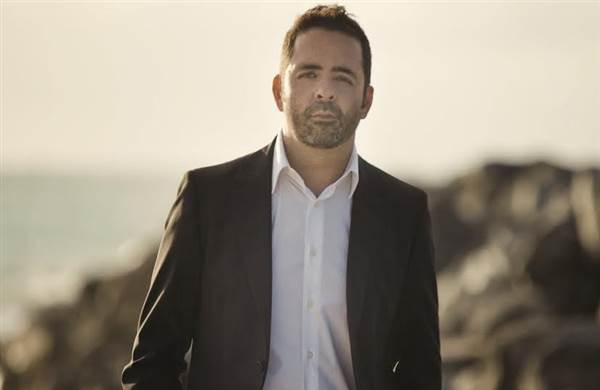
Wherever Jorge Mejía goes, he says he makes sure that a piano is never too far away; his life revolves around music. As the executive vice president of Latin America and U.S. Latin for Sony/ATV, he oversees the world’s largest Latin music publishing house – home to artists like Pitbull and Enrique Iglesias. But he is also an accomplished classical music composer. His debut album, “Preludes,” was released earlier this year with rave reviews.

It took Mejía at least 10 years to finish “Preludes,” which he describes as “biographical tidbits of his life.” As someone might turn to their best friend, he often turned to the piano as if to document each of his life’s moments, one note at a time.

“I have a piano inside my office…I play it every morning when I come in,” says Mejia, 43, who wakes up every morning at 4:30am to walk his dogs with his wife and write music before he starts his full-time job at Sony.

He still occasionally sings and plays guitar in the indie rock band The Green Room, which he started after attending the New England Conservatory of Music in Boston and the University of Miami, where he graduated cum laude in piano performance. But Mejía says classical music has been the most constant beat in his heart.

“My first love with music has always been classical music,” Mejía says. “I think music is the closest thing to magic there is. It’s the closest we come to being connected to whatever it is that is beyond us that we cannot see. Classical music, for me, is one of the best expressions of our spirituality and our connection to the world. No language can affect us the way music does.”

Mejía was born in Bogotá, Colombia, where he lived until he was 12, and then his family moved to Spain for a year. However, for the last three decades, he’s called Miami home.

“I like to say that I got my creative side from my mom and my business sense from my dad,” says Mejia.

His mother was a singer-songwriter as well as a TV presenter, and was also the Colombian consul general in Chicago until 2010. His late father was a banker who served as Finance Minister for Colombia, and later at the World Bank.

Mejía says he knew he wanted to be a musician as a young boy.

“I remember sitting with my dad…The Rolling Stones was on TV, and I said, ‘That’s what I want to do,’ and he said, ‘You better be the best one then,'” remembers Mejia vividly. “The movie, ‘Amadeus’ also made me think ‘I have to do music.’ I consider those moments turning points.”

After getting his degree in piano performance, he taught piano for a while, but found out that wasn’t the vocation for him. Instead, he sought out an internship at Sony music; 18 years later that landed him where he is today – overseeing Latin American and U.S. Latin music.

“Whether it’s dealing with opportunities in Brazil or Mexico, or meeting with songwriters and managers, it’s a very varied day – and that’s not when I’m not in a plane, which happens quite often,” says Mejia. “My favorite part of my job is building relationships with people who are as equally passionate about music and living a creative life. I also love the business aspect of it.”

He adds that the music industry is currently adapting itself to a new world.

“Within the Latin industry in the U.S., we’re adapting to changing demographics,” says Mejia. “We have assimilation happening. Finding the true voice of the Latin generation is more of a hybrid thing these days. It’s a great opportunity, and a great challenge.”

Right now, he says the U.S. Latin sound is regional Mexican or Latin urban, like reggaeton. The Latin American sound is more locally driven.

“Brazil [for example] is its own island, planet…Argentina, too,” says Mejia. “There’s a lot of music coming out of Colombia and Mexico, which is breaking out into the other territories. There is definitely crossover success, but a lot of the territories stick to their own local music and identity.”

He does predict that the Latin music sound will become more homogenized – maybe sounding more electronic. However, he says he also sees a possible resurgence to more traditional songs.

“As people become more and more Americanized, they’ll have more nostalgia for the traditional.” Mejia, himself, is all about celebrating nostalgia.

He’s now working on an orchestral version of “Preludes,” as well as an interactive book set to hit shelves in 2016, which is meant to accompany his album.

“The book tells of the biographical tidbits of my life,” explains Mejia. “You read each chapter, and then you play the music – that’s what I do when I do my shows.”

Mejía loves when people gather together to enjoy classical music, an activity he sees growing in Miami.

“I’ve always said that if Latin America came together, what a powerful force we would be,” says Mejia. “However, it is very ironic, because we also pride ourselves in our differences. I wonder if we’ll ever be able to do that?”

Originally published on NBCNews.com.
Antonia Pantoja, A Pillar Of the Puerto Rican Community, Remembered

From the film "Antonia Pantoja" by Lillian Jiménez

From the film “Antonia Pantoja” by Lillian Jiménez

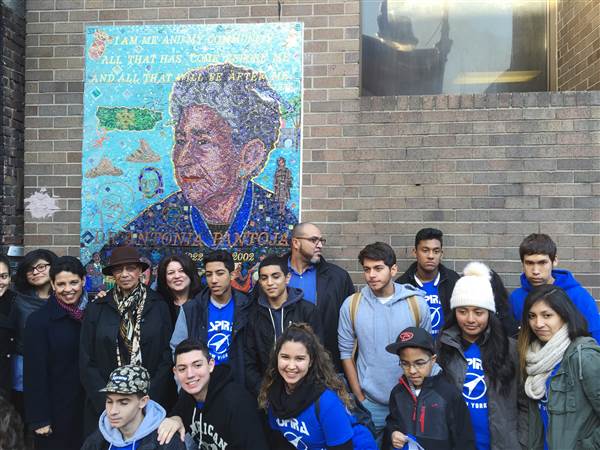
The life of a Puerto Rican New Yorker who transformed the lives of so many Puerto Rican and Latino youth was honored and celebrated with the unveiling of a mural at the heart of the city’s “El Barrio.”

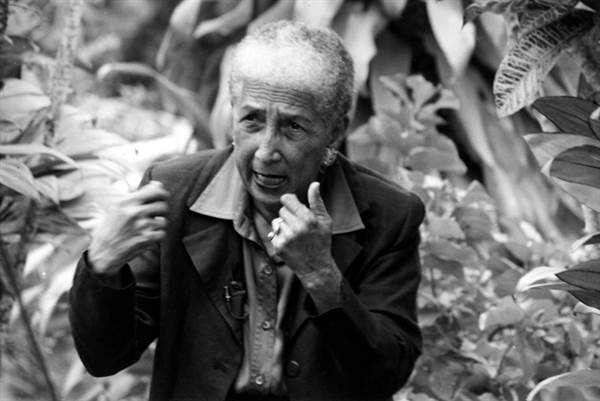
In her 80 years, Dr. Antonia Pantoja founded organizations that have helped educate and give opportunities to many. The educator and community activist, who identified herself as a “Nuyorican,” accomplished much more than most in one lifetime.

Perhaps best known as the founder of ASPIRA – a non-profit organization which to this day encourages positive self-image, commitment to community, and education to Puerto Rican, and other Latino youth; she also founded the National Puerto Rican Forum, which promotes economic self-sufficiency; and Universidad Boricua, the precursor to Boricua College; among many other organizations dedicated to community empowerment and education in New York City and beyond.

In 1996, Pantoja became the first Latina recipient of the prestigious U.S. Presidential Medal of Freedom Award for her role in the education and leadership development of Puerto Rican Youth in the United States and Puerto Rico.

On Saturday, Nov. 20, after three years in the making by renowned artist Manny Vega, a mosaic mural of Dr. Pantoja was unveiled which will allow her live on forever in “El Barrio” – a predominantly Puerto Rican community in New York City, which was very close to her heart.

A mural for the late Antonia Pantoja, founder of Aspira and Presidential Medal of Freedom recipient, was unveiled Saturday, November 21, 2015 in New York City's El Barrio. (Photo: Kristina Puga)

A mural for the late Antonia Pantoja, founder of Aspira and Presidential Medal of Freedom recipient, was unveiled Saturday, November 21, 2015 in New York City’s El Barrio. (Photo: Kristina Puga)

The event, attended by 100 plus people of all ages, began with the screening of “Antonia Pantoja ¡Presente!,” a 2009 documentary of the activist’s life by Lillian Jiménez. Afterwards, New York City Council Speaker Melissa Mark-Viverito – a Puerto Rican woman who is the first Latina in this position- gave a few words.

“The emotion in this room is intense,” Mark-Viverito said after watching the film. “When you think about the contributions she made, and the logros(achievements) we’ve made, we can trace them all the way back to her.”

Mark-Viverito went on to say that she had the privilege of meeting Pantoja in the late ’90’s. Together, they would take Puerto Rican students to the island to learn about their culture.

“She had a very infectious spirit,” said the New York City Council Speaker. “Everybody that worked with her would be inspired by her. She was a believer in young people and the concept of paying it forward. That’s what we need to continue to do. The importance of putting these mosaics up is a way of making sure our contributions will never be erased.”

Pantoja moved to New York City, from San Juan, Puerto Rico at the age of 22. The year was 1944, right before the end of World War II, and just preceding the mass exodus of Puerto Ricans to the mainland.

Although she arrived with a teaching certificate from Puerto Rico, Pantoja’s first job in NYC was as a welder in a wartime factory. However, since Pantoja was born with aspiration, she went to school right away – ultimately, graduating from Hunter College and then Columbia University’s School of Social work.

In the documentary, Pantoja said, “[Puerto Ricans] were coming to work in factories, and the children didn’t know what the teachers were saying.”

As was her character, as soon as she saw injustices, Pantoja would waste no time to take action.

“ASPIRA was absolutely the project that drove her – she loved the kids,” Jiménez, director of the film, told NBC Latino. “She had been thinking about the position of the Puerto Rican community in the ’50s, and the lack of leadership. She wanted to develop an organization that developed leaders.”

To this day, Jiménez says she is always meeting people that say “I was an Aspirante.” She says there are thousands of them – from actors Jimmy Smits and Luis Guzmán, to Angelo Falcón, political scientist and president of the National Institute for Latino Policy.

Jiménez told NBC Latino that the mosaic was a collective experience of all the people who were impacted by Pantoja’s life.

“We were about 12-13 on the committee – we had a lot of conversations. I gave [Manny] the film, photos of her, and he would always show us renderings. Finally we settled on this one design. Everyone on the committee laid tiles – [Supreme Court Justice] Sonia Sotomayor even came to lay tiles,” said Jiménez.

To many, Pantoja was a life-changing role model. But to Dr. Wilhemina Perry, her partner of 30 years, Pantoja was the love of her life. They met when Pantoja joined the faculty of the San Diego State University’s School of Social Work in 1978.

“A couple of people had gathered to greet her in San Diego – I was teaching there at that time,” Perry, now 81, remembers about the first time they met. “She and I had started talking – we talked about social work – our professions. I remember thinking this is the most interesting person I ever met…She was like dazzling!”

Together, they co-founded the Graduate School for Community Development in San Diego, where they lived at least 15 years, and then moved to Puerto Rico for 13 years. There, they co-founded Producir – a community organization that has helped a rural community create its own cottage industries to generate employment -before they both decided to move back to her beloved NYC. Unfortunately, they only had two years there, as Pantoja was diagnosed with stage 4 cancer.

“They predicted she would have four months to live, and she only had three months,” Perry told NBC Latino. “No one wants to lose a loved one, but I felt a little relieved because she had no pain – it was so quick.”

What Perry says she remembers most of Pantoja was that she was, “a very powerful, tiny and intense person, but she could also be funny and have this smile come on her face. She was very intense, but had this light side of her…”

“I’m thinking what would make her most happy about the mural, is the fact that who she was, and what she was trying to teach, will live now publicly. Not so much for her, the person, but she would see it as a way of extending her legacy and encouraging people to use her work as an opportunity to do their own work. She felt very strongly about that. She would say it’s not about me, but what are you going to do to make society a better place?”

Originally published on NBCNews.com.
Mexican-American Monk Shares His Faith Through Chart-Topping Album

150811-chanting-monk-mn-1955_e0a21ece2d00b15d322b3cd779e62d64-nbcnews-fp-1240-520

Basil Nixen, center, a native of Arizona, is the choir master of the Monks of Norcia, who have a chart-topping album of Gregorian chants. (Photo/De Montfort Music/ Universal Music)

Basil Nixen always felt a special closeness to God and now the Arizona native who became a monk is sharing that closeness with the rest of the world through a top-selling album of Gregorian chants.

Nixen took an eternal vow to live in a 10th century monastery in Norcia, Italy. At 35, he is one of the 18 monks at the monastery who live relatively solitary and secluded lives, devoted to prayer and music.

But the monks of Norcia (with an average age of 33) also have found a personal connection with the secular world. In 2012, they started a craft brewery at the monastery, Birra Nursia, which has gained worldwide fame and is their primary source of income.

They have also made their debut album of Gregorian chants called “Benedicta,” which has topped Billboard’s Classical Album list for the past nine weeks.

Nixen is the choir master of The Monks of Norcia. He was also musical director for their album and wrote the one original composition on the album, “Nos qui Christi iugum” (We who have received Christ’s yoke).

Before entering the monastery, Nixen spent two years studying music at Arizona State University’s School of Music. He was only 20 when he chose the monastic route.

“I had already wanted to become a priest, but while I was studying for the priesthood, I wanted to understand more about the liturgy of the Church,” he says. “I grew to learn the chants, and this had to be the most important moment of my life. I found a community in Norcia where they lived this daily form of prayer, and this was a very big moment for me where I learned I could live my life through Gregorian chants.”

He believes his Mexican heritage played a key role for him wanting to go into the priesthood from a very young age.

“Both of my parents come from Mexico – they came from traditional Mexican families,” says Nixen. “Being Catholic was part of their heritage and identity – they passed that down to me.”

The life of a monk is no easy task. Nixen says a typical day begins at 3:30 a.m. and ends around 9 pm.

“Some might wake up earlier,” he says. “Our first prayer is at 4 o’clock … It’s the longest and most difficult prayer of the day, but it really gets the body and the mind flowing.”

He adds that it’s a crucial element in monastic life to gather throughout the day. Including the Mass, they gather eight times to pray through chanting.

“In between those prayers, we work,” says Nixen. “In addition to the brewery, a lot of work goes into receiving guests and pilgrims. We also have a monastic store that we operate, and the normal runnings of the monastery – cooking – which I oversee as cooking master, liturgical work goes into prayer service, and then the managing finances and communications – our lives our very full.”

As far as diet, he says they follow the rule of St. Benedict who asked that they abstain from eating meat. Additionally, for half of the year (from September until Easter) they have only one primary meal in the afternoon, instead of two, as the rest of the year.

“This small expression of discipline helps us devote ourselves to God,” explains Nixen. “Our diet consists of fish, eggs, legumes, beans. We are living in Italy, so we have pasta almost every day. We are also an international community, so we might have a strong Asian meal. I come from a Mexican family, so we might have a Mexican meal.”

Nixen, who just celebrated his seventh year of perpetual vows, says he’s noticed quite a few changes since he’s joined the monastery.

“Before, the distance from your family was a much bigger sacrifice,” he says. “Now I can have Skype contact … However, it’s still important that you have separation from the world and separation of family and friends … It’s arranged by our superiors how often [you can contact the outside world].”

Additionally, the number of Latino Catholics have decreased. According to the latest Pew Research Center report, 55 percent of Latinos are Catholic in the U.S., down from 67 percent in 2010. However, Nixen does not show concern.

“I think the best thing that the church can do is be herself and be the living truth as given to us by Christ,” says Nixen. “The more authentically she does this, the more people will be drawn to it. Authenticity is key.”

It was authenticity after all which led to the success of “Benedicta.”

“These chants were written in a climate of prayer – an expression of somebody’s prayer and relationship with God – that’s the reason for its beauty,” he says. “You perceive some of the peace that was part of the experience. The music itself is written through an authentic experience with God.”

Originally published on NBCNews.com.

‘Unity’: A Latin-Style Tribute to King Of Pop Michael Jackson

Composer and arranger Tony Succar (Photo/ Julie Hunter)

Composer and arranger Tony Succar (Photo/ Julie Hunter)

At 28, composer and multi-instrumentalist Tony Succar has accomplished a pretty remarkable feat. For the past four years, he has worked tirelessly to bring to life the masterpiece that lived in his musical mind – to unite 100 talented musicians, including Jon Secada and salsa stars such as Tito Nieves, Obie Bermudez and La India, to make the first-ever Latino tribute to the late King of Pop, Michael Jackson. In other words, think “I Want You Back” with a salsa twist.

After licensing obstacles and hours and hours of rehearsals and editing with Michael Jackson’s very own Grammy-winning audio engineer Bruce Swedien, Succar’s 12-track album, aptly titled “UNITY: The Latin Tribute to Michael Jackson,” is being released April 14th on Universal Music Classics in collaboration with Universal Music Latin Entertainment.

As part of the project, Succar and his production company produced an hour-long documentary about the legendary experience which is going to be released on DVD in Mexico this month and with plans for the U.S. in the future.

It’s fuego!” (“It’s fire!”) is how Succar describes his debut album.

Born in Peru to a Japanese mother and a father with Lebanese, Mexican, and Spanish roots, Succar immigrated to Miami, where he presently lives, when he was two. He was surrounded by music all of his life, as his parents Antonio and Mimy Succar were musicians in Peru. While in the U.S., the family started their own family band called Mixtura – the same name Succar named his current production company after.

Soon after graduating with a master’s degree in jazz performance at Florida International University in 2010, Succar says he got a call from a booking agent asking him to produce an outdoor Halloween tribute to Michael Jackson called “Thriller on Collins.”

“But I said, ‘I’m a salsa band – how am I going to do that?’,” Succar recalls replying to him. “So it was like God saying this is going to happen. I did a salsa version. The people loved it,” he says. “When I saw the reaction, I thought if they liked it with ‘Thriller,’ they would like it with other songs. It was a dream for me starting from nothing.”

After the success of show, Succar wasted no time in starting a Kickstarter campaign which raised $10,700.

“The main thing that connected with me is his (Michael Jackson’s) musicality. He kept pop music at a high level. Being a musician, you love that and all of us [musicians] understand that,” says Succar. “And secondly, I really admired that he wrote music with a very positive social message that spoke about love and change. Something we need to respect Michael Jackson for, and why I named the album “UNITY.”

The other musicians share a similar sentiment.

“Michael Jackson was an influence for a lot of singer-songwriters,” says singer Jon Secada in the “UNITY” documentary. “I think what attracted me to this project starts with the music – how much I love the music. I think Michael Jackson would love it, because he was an innovator. He enjoyed taking chances.”

Tito Nieves added, “All we can do is make sure his music never dies.”

How did Succar get so many well-known musicians to participate in his project?

“It wasn’t that I chose them, it was a domino effect,” says Succar. “I tried to get Tito Nieves for three months until I said ‘Olvídate!’ (‘Forget it!’) I ran into Kevin Ceballo. We started recording the songs. I was planning just to do it with him. Then a guy peeked in the studio one day and said, ‘Hey, it sounds pretty good.’ He was really good friends with Tito Nieves!”

Apparently, Succar says he had e-mailed Nieves so many times, they told him he had been labeled as spam. However, thanks to that random listener who knew Nieves and called him on the spot, Nieves agreed to participate in the project immediately.

“The music spoke for itself – that’s how everyone was chosen,” says Succar. “No money in the world could have made this happen.”

Succar says he listened to every Michael Jackson song multiple times in order to choose the tracks for the “UNITY” album. At first, he was going to choose the ones that gave him goosebumps.

“But all of them gave me goosebumps,” says Succar laughing.

“All African music has la clave – bam bam…bam bam,” he continues, while tapping his hand on his knee as if it were a cajón – the first instrument he ever learned at age three. “When you analyze Michael Jackson’s music, I would call it African American music. When I listened to the music, I’d play la clave to it, if it sounded good, those were the ones I’d keep.”

Then, he says he thought about how to create a story with the songs he picked.

“‘I Want You Back’ was a song he sang as a little boy on ‘The Ed Sullivan Show’…the most important I wanted to include were songs that spoke about Michael Jackson’s mission – about unity and change,” says Succar, who also ended up including “Earth Song” sung by La India and “They Don’t Care About Us” sung by Kevin Ceballo, among others. “At the end, it’s to be a grain of sand to continue what he wanted to see in this world – ‘No’ to discrimination and ‘yes’ to equality.”

Succar says he had become the ultimate fan of Jackson after he died, and even more so after this project.

“I’m so thankful for the opportunity for me to put a drop of sand in his legacy and inspire others to learn about his music,” he says. “Many times Latinos know the songs, but not the lyrics so sometimes we change the lyrics to Spanish.”

In total, 100 musicians participated in the “UNITY” album, but Succar says there are 16 of them that travel to play.

“I want to be able to tour the live Michael Jackson experience,” says Succar. “I strongly believe that ‘UNITY,’ that title, is not only a representation of what this album means, but a representation of a movement that I’d like to create where we can unite cultures and do special projects. I want to try to do the same with other artists and bands like The Beatles, and the Bee Gees – songs that translate to the Latin format. Un granito de arena. UNITY is not going to end here. You’ll see more in the near future.”

Originally published on NBCNews.com.

Nun Fights For Families Of Killed, Missing In Mexico’s Drug Wars

Sister Consuelo Morales (Photo/Victor Hugo Valdivia)

Sister Consuelo Morales (Photo/Victor Hugo Valdivia)

When one thinks of drug wars, a nun does not come to mind. But 67-year-old Sister Consuelo Morales’s fight for the families of those missing or killed in Mexico’s drug wars is one of the powerful story lines in the new documentary, “Kingdom of Shadows,” making its world premiere at SXSW on Monday, March 16.

Acclaimed Mexican-American filmmaker Bernardo Ruiz (Emmy-nominated “Reportero,” 2012), follows three individuals, with very distinct lives, all dealing with the consequences of the U.S.-Mexico drug war.

There’s a Texan rancher who fell into drug smuggling, because he had trouble making ends meet as a farmer, as well as a Homeland Security Investigator on the U.S.-Mexico border who witnesses the continual rise of violent and deadly organized crime. Then there is Morales, a Catholic nun in Monterrey, Mexico fighting for the rights of families whose loved ones have been killed or “disappeared” as a result of drug violence.

Sister Morales returned to her native city of Monterrey, Mexico in 1992, after years working to help indigenous communities in Veracruz and in Mexico City. She came back to find her community in turmoil. It was then she helped found Citizens in Support of Human Rights (Ciudadanos en Apoyo de Derechos Humanos, CADHAC) to help families in need – and she has devoted her life to that cause for the past two decades.

According to the latest official numbers from the Mexican government, the number of people who have disappeared since the start of the country’s drug war in 2006 is nearly 23,000 (although this number has fluctuated widely depending on the administration). Filmmaker Bernardo Ruiz argues the most international attention this crisis has gotten was the disappearance of 43 college-student protesters in the southern Mexican state of Guerrero in September 2014, recently declared dead.

In an interview with NBC News, Sister Morales says the violence has substantially increased since 2007. “This situation of violence touches not only the people involved with narcos or the drug business, but it also touches families and young people that had nothing to do with it. When the Mexican government decided to stop this…the situation became worse and worse, because citizens were in between the delinquents and the soldiers. They were in a very vulnerable situation.”

She says that individuals ages 16 to 35 are the most affected by the violence and targets of kidnappings/killings. The worst years, she remembers, were 2010 through 2012.

“We were frozen,” says the nun. “People were so scared and still are scared. We just received a case from a mother who said five years ago they took away her son. Her husband is so scared [of the drug cartels] that he didn’t allow her to put an announcement with the authorities. They put an announcement with [CADHAC], but the day after, they didn’t come back.”

She explains this behavior is common, because Mexican citizens fear everyone – even the authorities – because they are also known to be involved in narco trafficking.

“Two years ago, a kid – two and a half years old – was walking with his father very close to his office,” remembers Sister Morales. “His father wanted to take him to the doctor. On the corner, there were two groups of young people. One of them was taking people away. They took his father, and left the boy on the street..If we don’t do something to support and give what we can to this child to grow in confidence, what will he have in his heart?”

According to Sister Morales, the people who are generally taken away are the ones giving economic support to the family. In this way, she says, the narcos are instilling fear in the community. If you don’t have money to pay them their “dues,” you get taken away.

The petite yet strong-willed nun arrives at CADHAC around 8:30 am every morning. After meeting with her team, she has appointments throughout the day with people needing help with justice or violent situations.

“They come and ask questions and share information with us, and we help them resolve their problems,” says Sister Morales. “We may help them, and stay beside them, but never in front of them. We help them with the tools to get justice.”

There was a point in her life, she says, when she questioned her belief in God. But helping people was something that was innate to her since she was a young child.

“I asked myself what was the message that Jesus gave us – it is to love each other,” says Sister Morales about why she does the work she does. “The only thing that is important is that they are human beings, and they have dignity. I am their sister.”

Bernardo Ruiz sees her as a savior.

“What I do know is that people like Consuelo, and the families she works with, need more international support,” he says. “From my perspective, they’re the ones who represent our path forward.”

Originally published on NBCLatino.com.

3 travel destinations to volunteer in Latin America

It might be time for you to plan your next vacation, but you want to do more than lie around on a beach sipping drinks. If you have wondered about volunteering abroad, it’s a great way to give back to communities who could use a helping hand.

In honor of Hispanic Heritage Month, we spoke to Americans who have volunteered in Latin America, and they shared with us their life-changing experiences. You don’t need much time, or money. In as little as a day or two, and $50, you can make a difference in someone’s life.

Build Houses In Colombia

José Giron was born in Bogota and immigrated to the U.S. at age 5. Today, he’s a student at the University of Southern California. After hearing so much from family and friends about the good deeds Techo does in Latin America, he finally decided to volunteer with the non-profit organization and went to Medellin in June of 2013.

The project involved 15 U.S. volunteers and around 150 local volunteers, and its aim was to build 25 houses in a slum on the outskirts of Medellin. We asked José about his experience.

Sign-up process/requirements:

“It’s just a matter of sending an e-mail that you’re interested in helping in some way. Because Techo is basically volunteer-driven, we relied on our own fundraising to achieve our goals. Each volunteer had to pay something like $200 USD. If we didn’t come up with our goal amount for the trip, the central office in Chile would have to lend us the money that we have to pay back.”

Length of trip:

“I left on a Thursday night, and I was back Sunday afternoon, but I fundraised for a good four months for my plane ticket. Techo has teams that go months ahead of time to identify the groups of individuals or families that need the most help. The house costs about $2,000, and the family has to come up with about $200 (10 percent) in a couple of months. Techo volunteers also search the areas to see if the area is plausible given the terrain. You can volunteer for any part of the project.”

Where was the stay:

“In a school in Manantiales de Paz – 20-25 minutes from the city, but it’s the second largest slum of people displaced by violence. These people have been displaced because the military and guerrillas are fighting too close to their homes…There is no water – it is brought up by trucks. This makes water much more expensive.”

(Photo/SANTIAGO LOAIZA) A view of Manantiales De Paz.

What volunteers do:

“The first thing you do is get split into cuadrillas of 7 to 8 people. Each of these cuadrillas are assigned to build a house in the slum. We were assigned to this house that was up a steep hill. We had to carry all our equipment, because the trucks couldn’t even reach it. We had to carry like the entire front wall up the slope or the main beam up the slope. You work with the family that you are building the house for, and you really experience what it’s like to live there. We worked for three days building this house, from dusk until dawn.”

Life-changing moment:

“One of the nicer experiences is seeing how many people in the community helped us. There was a man who didn’t have an arm. He was helping us unload these extremely heavy beams and carrying them up the slopes, which were stairs made out of sandbags. At my particular house, there were these three neighborhood kids who were helping us – not more than 10-years-old. That was pretty moving.”

(Photo/SANTIAGO LOAIZA) Three neighborhood children who helped us build the house.

Visit Orphans In Mexico

Hilda Pacheco-Taylor, the founder of the Corazón de Vida Foundation, was an orphan in Baja, Mexico herself when she was a young girl. Today, she supports 15 orphanagesthroughout Mexico, housing more than 850 children. As they get older, she tries to teach the youths job and social skills with the help of the volunteers that visit.

Mariana Saori Wall, 26, from Venice Beach, CA, has been volunteering with Corazón de Vida for the past seven years. The focus of the trips, she says, is to spend time with the orphans and provide them much needed one-on-one attention. We asked Mariana about her trips:

(COURTESY OF MARIANA SAORI WALL) A volunteer comforts a child living in an orphanage, in Baja, Mexico.

Sign-up process/requirements:

“Volunteers can register on the Corazón de Vida website (www.corazondevida.org). The cost of the trip is $50 USD, and it includes the bus trip, lunch for the kids and volunteers, and a craft for the day. U.S. citizens must have a valid passport. Non-U.S. citizens must have a passport, visa and proper forms for re-entry. For minors under 18, parents must sign a consent form. Minors under 15 must be accompanied by a parent.”

How long does the trip take:

“Each month, a chartered bus with up to 55 volunteers departs from Los Angeles, Orange County and San Diego. From there, you’re at the orphanage in Tijuana in 20 minutes – arriving around 10am, and back home by 4pm. You can also go to one of the other orphanages in Mexico, like Baja for example, and you can have housing for a week, or a couple of nights. People come from as far as Germany.”

What you do:

“When you arrive, you’re greeted by all the kids. They know you’re coming that day, and they’re super excited. As soon as you get off the bus, they grab your hand and pull you inside. The first hour, you’re walking around and they’re showing you the place. They have an activity for you, making crafts, bracelets, and then you can volunteer to prep for lunch. Every volunteer picks a task for the day.”

Why it’s important:

“The orphanage in Tijuana is called “La Hacienda” and houses around 50 to 60 kids – the majority ages 3 to 12, a couple of teenagers…Tijuana is a big city and a lot of people are traveling in and out of there – a lot of prostitution, drugs, some places have more kids abandoned than others. I’m working on a documentary on these orphanages, which talks about the basic things the kids struggle with – getting paperwork ready for school, finding their birth mothers, so many struggles these kids are going through.”

Life-changing moment:

“Just seeing them (the children) be happy is what keeps me motivated to do my work with them. These kids are so happy. They are just so in love with the volunteers, so excited to see you. It’s so hard to leave. That’s the worst part, to have to go home. There is this one kid this past weekend. She’s about 3 or 4-years-old. She doesn’t speak. They are trying to evaluate her, because she doesn’t laugh or cry. One of the volunteers held her the entire four hours we were there. When we finally had to go, she gave the volunteer a kiss, and everyone was in shock. It is moments like those that you see these kids are getting better, and we are making a positive influence on their lives.

Clean Drinking Water in Ecuador

James Golden traveled to Muisne, a coastal town in northwestern Ecuador, during his summer vacation from Harvard University this past May through early July. He went with Water Ecuador, a nonprofit which provides new drinking water solutions to six developing towns in Ecuador using appropriate technology and business models according to the location.

Water Ecuador was created after Alex Harding traveled from the U.S. to volunteer in a small hospital in Muisne, Ecuador in 2006. He spent all summer watching children come through the hospital’s emergency room with illnesses caused by the lack of safe drinking water: diarrhea, vomiting and intestinal parasites. He quickly learned that being sick was almost a normal state of being in Muisne and decided to do something to stop the cycle. Golden told us about his experience.

Sign-up process/requirements:

“Water Ecuador does not charge any fees to their volunteers. They just ask that volunteers cover the cost of their travel and room and board. They prefer volunteers with significant experience in global health, or work in developing countries, and ask that volunteers come for a minimum of a month (sometimes doctors go for a week), but anyone is welcome to help. All is takes is filling out a short online application.”

Where do you stay:

“The accommodations depend on the site you’re staying at. There are four or five hostels to choose from. You have your own room with a bathroom, and sometimes you have WiFi. The cost is approximately $10 a night for a short-term stay, or $2 to $4 a night for an entire month. The main street of Muisne had a lot of hustle and bustle and store fronts, but as you got away from the main street, you could see poverty a little more evident and streets less paved.”

(Photo/JAMES GOLDEN) Muisne is pretty much always flooded during the rainy season (December through May).

What you do:

“I looked at the cost equality analysis of the 6 water treatment centers that Water Ecuador operates. I was planning on looking at the water quality of the handful of centers in Muisne, comparing it with the water we were distributing ourselves. What I found was that even though the water was adequately treated, they don’t do a good job at sanitizing their reusable water containers. They were contaminated and even had E. coli. That’s what Water Ecuador is currently looking at.”

Life-changing moment:

“The second week that I was in Muisne, I got a throat infection. I was trying to tough it out, but after three days of my throat swelling up, I realized I really couldn’t swallow anything. I ended up going to a private doctor, which cost me $10 and antibiotics cost me $4. I tested the water jug I was drinking out of and found E. coli on it. It was the most sick I’ve ever been, and I realized it was kind of routine for them. I experienced how debilitating it can be, but I could afford to go to the doctor. The locals can’t really afford to go to the doctor.”

(Photo/JAMES GOLDEN) Children in Muisne, Ecuador.
Originally published on NBCNews.com

Treasured Travel Destinations of Latino Americans

We figured Hispanic Heritage Month could inspire some of us to look to our homelands as we plan – or dream – about our next vacation. It’s easy to overlook the stunning diversity of landscapes in the Caribbean and Latin America.

NBC News Latino asked some of our friends to share their special places when they go visit their families’ native countries. We got back some beautiful pictures and unique locations.

Mexico

It’s hard to pick where to travel to in Mexico, because it has so much diverse beauty in its more than 30 states. Cancún, and Tulum, which both reside on the Yucatan Peninsula in the state of Quintana Roo, continue to be winning beach destinations year after year. The capital, Mexico City, is one of the largest metropolitan areas in the world, with 16 boroughs and more than 300 neighborhoods. In addition to being a lead city in the arts, it is also home of the Aztec archaeological ruins of Teotihuacan.

Jaime Davila’s family is originally from General Terán in Nuevo León. Also known as the“Breakaway Backpacker,” Davila is currently on his second trip around the world and just happened to be in Mexico. He said this has been his favorite gem so far:

Image: Guanajuato, Mexico.
(Photo/JAIME DAVILA) Guanajuato, Mexico.

“Get lost in one of the many callejones, “alleys,” that make up this colonial city set on hills,” said Davila. “As you wander its cobblestone streets, you’re met with an array of color. You can’t help but smile with joy and wonder how it’s kept its charm for so long. Even though it is filled with many attractions, the best thing to do, when visiting, is to just get lost and soak it all in.”

Chile

With its amazing stargazing at the Atacama Desert, its ancient moai statues on Easter Island, and beautiful ski slopes during (our) summer, Chile placed second on Yahoo Travel’s “World’s Top 10 Countries” this year.

Andrea Farah, who is from the capital, Santiago, visited this luscious place in southern Chile in 2011 and has loved it ever since:

Image: Termas Geometricas.
(Photo/ANDREA C. FARAH) Termas Geometricas, Chile.

Termas Geometricas has been one of the most breathtaking sites I have been to – there is so much peace and beauty there,” said Farah. “I literally felt full of energy visiting the Termas. I would definitely recommend anyone visiting Chile to go to there. There are hot springs in the middle of the forest! It can’t get any better than that,” she shared.

Loreto Riveros Fraser, also from Santiago, loves visiting the city of Valparaíso about an hour away from her hometown.

Image: A trolleybus and the Turri Clock Tower behind it in the Financial District of Valparaiso, Chile. (Photo/LORETO RIVEROS FRASER) A trolleybus and the Turri Clock Tower behind it in the Financial District of Valparaiso, Chile.

“I took this photo in February while I was visiting my family after two years,” said Riveros Fraser. “It is special, because it is a family tradition to go and ride the trolleybus, and I haven’t done that in a long time,” she shared.

Bolivia

Bolivia, like Peru, was part of the Inca Empire before Spanish colonization. The land-locked country has many beautiful spots to visit such as Lake Titicaca and Madidi National Park.

Ingrid Matias, whose family originates from Bolivia, recommended this unique location:

Image: Salar de Uyuni, salt water flats in southwest Bolivia.
(Photo/INGRID MATIAS) Salar de Uyuni, salt water flats in southwest Bolivia.

“If you’ve ever wanted to walk on the clouds, Uyuni is the place to visit,” she said, adding that everyone who visits el Salar must join a tour group. “The whole tour lasts three days.”

Image: Hotel-Museo del Sal in Salar de Uyuni.
(Photo/INGRID MATIAS) Hotel-Museo del Sal in Salar de Uyuni.

“We didn’t stay in Hotel-Museo del Sal, because it’s a museum now, but we did stay at a salt hotel in a nearby town,” she told us. “The bed frames were made of salt. The walls were made of salt.”

Puerto Rico

The island of Puerto Rico is just a gem in itself. Walking through colonial San Juan, and climbing to El Morro brings you back to the 16th century. You can also take a ferry to visit some of the world’s most beautiful beaches off the islands of Culebra and Vieques.

Jessica Caban, who is from the northwestern city of Aguadilla, said she has been to the El Yunque Rainforest twice already and can’t get enough:

Image: El Yunque National Forest in Rio Grande, Puerto Rico.
(Photo/JESSICA CABAN) El Yunque National Forest in Rio Grande, Puerto Rico.

“There is a small rock ledge that you could stand on – on your way up to the highest peak – where you can see a large part of the forest and feel the clouds on your skin,” said Caban about El Yunque, a rainforest that is part of the U.S. National Park Service (Puerto Rico is a U.S. commonwealth). “It’s actually a very breathtaking view, but quite scary, – the ledge is small, and there are no guard rails so you can fall off!” she said.

Caban also loved hearing the coquis (small tree frogs native only to Puerto Rico), butterflies and parrots, as well as the waterfalls and rivers one can bathe in.

Priscilla Rivera from Luquillo loves this hidden treasure of Puerto Rico that she recently visited:

Image: Rio Camuy Caves in Arecibo, Puerto Rico.
(Photo/PRISCILLA RIVERA) Rio Camuy Caves in Arecibo, Puerto Rico.

“You basically have to go through someone’s backyard to get to this particular cave and waterfall system,” said Rivera. “On the way there, you walk along a very steep mountain, almost on your tippy toes, and then once you reach the cave, you have to jump in ice-cold water to get inside of it.”

The tour of the cave itself is about two hours long, she said, and it requires maximum physical fitness – as well as not being afraid of cave spiders and bats.

“I thought I wouldn’t make it through all of the different entrances of the cave because of claustrophobia, but the equipment they give you and a well-trained tour guide helped a lot,” said Rivera. “Once you get out of the cave, you go through this tunnel waterfall system on your back – body rafting.”

Peru

Recently named the leading cultural and culinary destination by the World Travel Awards, Peru is the home of the majestic 15th-century Inca site, Machu Picchu, the mysterious Nazca Lines, located in the Nazca Desert in southern Peru, and some of the world’s most genetically diverse crops.

Jonathan Siu, originally from Lima, Peru, shared some of his favorite, less known locations in his native country:

Image: Paracas, a desert reserve located near Las Islas Ballestas.
(Photo/JONATHAN SIU) Paracas, a desert reserve located near Las Islas Ballestas.

“The first thing that comes to my mind is the peacefulness of the area,” said Siu. “AlthoughParacas is becoming a resort-esque city, it still conveys a local, almost familiar ambience. I took this picture on my way to the Ballestas Islands.”

Image: Village of Huacachina, five hours south of Lima.
(Photo/JONATHAN SIU) Village of Huacachina, five hours south of Lima.

Huacachina is a small village that surrounds a natural oasis in the desert of Ica,” he said. “We got there after taking a buggy ride and sand boarding throughout the desert dunes. It is truly a magical place. On this particular day, the weather was not on our side, hence the contrast between the dark skies and the whiteness of the sand.”

Dominican Republic

From its 16th century castles and monasteries to its tropical green hills and turquoise beaches, the Dominican Republic is a favorite destination for many. Catherine Cuello, co-founder of the Greenhopping app, says these two places from her native Dominican Republic make her feel at peace, calm, and serene.

Image: Puerto Bahia in Samana, Dominican Republic.
(COURTESY CATHERINE CUELLO) Puerto Bahia in Samana, Dominican Republic.

“It’s my place to unwind and re-power to be able to handle New York City,” says Cuello. “It’s my safe haven and my piece of bliss.”

Image: A view of the beach in Barahona, Dominican Republic.
(COURTESY CATHERINE CUELLO) A view of the beach in Barahona, Dominican Republic.

Brazil

There doesn’t seem to be a single person who doesn’t have Brazil on their “bucket list” of places to visit, and it’s with good reason.

Rio de Janeiro is home to the iconic Ipanema Beach, the largest art statue in the world –Christ the Redeemer– and of course Rio’s annual Carnival held during the Friday to the Tuesday before Ash Wednesday.

Denise Oliveira, from Rio de Janeiro, shared with us her family’s favorite location:

Image: Marau Peninsula, town of Barra Grande, state of Bahia in Brazil.
(Photo/NESTOR MACIEL) Marau Peninsula, town of Barra Grande, state of Bahia in Brazil.

“Barra Grande Beach in Bahia has become my family’s favorite vacation destination in Brazil,” said Oliveira, “…it has the most beautiful scenery in the country, and the food is amazing.”

 Originally published on NBCNews.com.


The Latinas behind the Americas Latino Eco-Festival

Festival founder, Irene Vilar (Photo/Gary Isaacs)

Festival founder, Irene Vilar (Photo/Gary Isaacs)

Irene Vilar is no stranger to activism. She says her own grandmother spent 27 years in prison for fighting to make their native Puerto Rico an independent state.

Vilar wrote a memoir and became an author at the tender age 22. Years later, she founded the non-profit Americas for Conservation + the Arts, the mother organization of the Americas Latino Book Awards, as well as the first non-profit literary agency in the U.S. dedicated to proliferating minority literature in the Americas. Continue reading

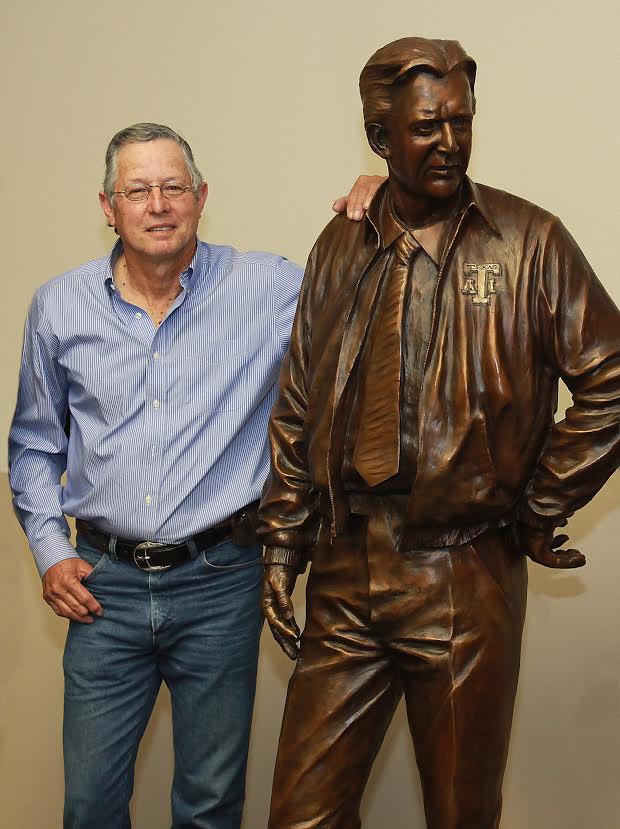
The Tejano Sculptor Behind The Life-Size Statue Of Texas Coach Gil Steinke


Armando Hinojosa with his statue of Coach Gil Steinke (Photo/Doug Smith)

Armando Hinojosa with his statue of Coach Gil Steinke (Photo/Doug Smith)

Amando Hinojosa is a former art teacher from Laredo, Texas, well-known for his beautiful bronze sculptures across the nation.

Over his 40-year sculpting career, his intricately detailed work can be seen decorating Sea World, Boy Scouts of America, and different hotels and court houses around the country. In 2012, his Tejano Monument was unveiled in Austin – the largest monument at any state capitol in the nation. It is comprised of 11 life-size bronze sculptures and represents the Hispanic influence on the formation of Texas.

RELATED: Sculptor to unveil Tejano Monument after a decade

On Saturday his latest project was unveiled at the football stadium of Texas A&M University-Kingsville: a life-size, 6-foot statue of its legendary football coach, Gil Steinke. Steinke led the Javelina football team from 1954 to 1977, and played for Texas A&I University, as it was known until 1993, from 1938 to 1941.

“He was the first college football coach to recruit Blacks and Hispanics,” said Hinojosa in an interview with NBC News, when asked why this particular project makes him so proud. “He won six national champions…and got more players in the NFL Hall of Fame than any other coach.”

Hinojosa, who is an alum of the University when it was called A&I, said that a life-size statue costs about $30,000 to make. According to a University news release, the Texas A&I Alumni Association donated the statue to the school, and the University paid $70,000 to prepare the foundation.

“Twenty years ago, we changed our name from A&I, but we still have an alumni group for A&I,” said A&M University-Kingsville President Steven Tallant. “That group raised the money and selected Armando to do the sculpture, and they donated the sculpture to us.”

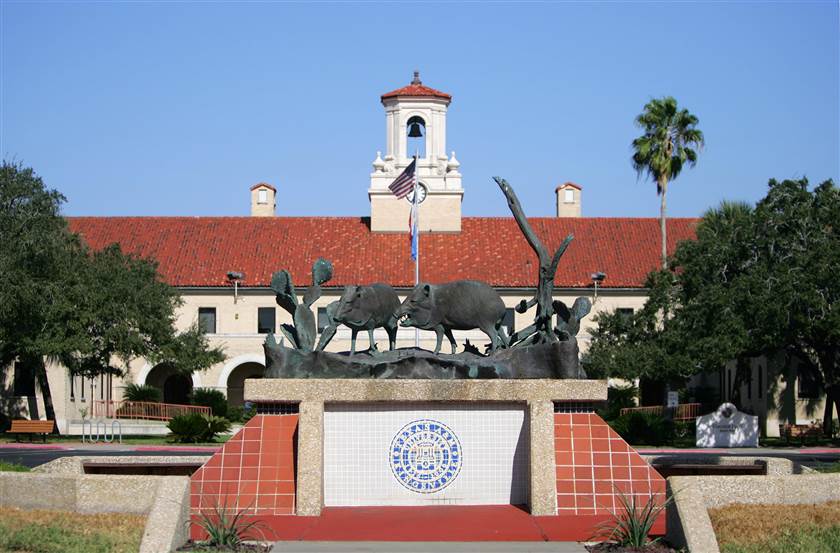
Hinojosa has two more statues on the Kingsville campus, including one of their mascot, javelinas, called “Leader of the Pack.”

(Photo/Doug Smith)

Hinojosa explained he is a proud Tejano. His father – also an artist– came from Mexico and married his mother, an American citizen, who was a direct descendant of the founder of Laredo, Don Tomas Sanchez. His family resided in Texas as early as 1755.

The energetic 70-year-old artist said he’s looking forward to his next project. The Cotulla Convention Center in South Texas has already booked him to make a life-size sculpture of the city’s founder, Joseph Cotulla.

“I gotta move on,” he said. “I gotta work for the future now. I’m ready for something new.”

Originally published on September 6, 2014 on NBCNews.com.

NYC songwriter couple sing together in the name of immigration

Katya Diaz and Chris Hierro (Courtesy Break Out The Crazy)

Katya Diaz and Chris Hierro (Courtesy Break Out The Crazy)

Talk about a match made in heaven.

Katya Diaz is the daughter of Puerto Rican opera singer Justino Diaz, and Chris Hierro is the son of Henry Hierro, music producer and Dominican leader of the 80’s merengue band La Gran Manzana.

Katya and Chris are singer/songwriters themselves and met while singing background for multi-Grammy-winning Spanish pop singer Alejandro Sanz two years ago. Ever since then, their love for each other blossomed, and they started writing songs together. Their repertoire has a wide range from country/pop to electronic dance music.

“After reaching out to everyone we know, we decided to just upload our demos to the internet via Soundcloud, and now YouTube, under the name ‘Break Out The Crazy’ and try our luck that way,” says Chris, who produces and accompanies other artists and is currently signed with Peer Aquos Music.

His latest project, with girlfriend Katya, is for a cause they are both passionate about – immigration.

“It was originally suggested by our good friend Anthony Valderrama who, like us, was seeing what was happening at the border on the news,” says Chris. “We are usually not political writers, but Katya and I were compelled by the fact that this was affecting innocent children. I am a father of a 4-year-old boy and will always champion for children’s rights.”

Originally published on DailyVida.com.