Latina Leaders: From psychologist to online networking leader

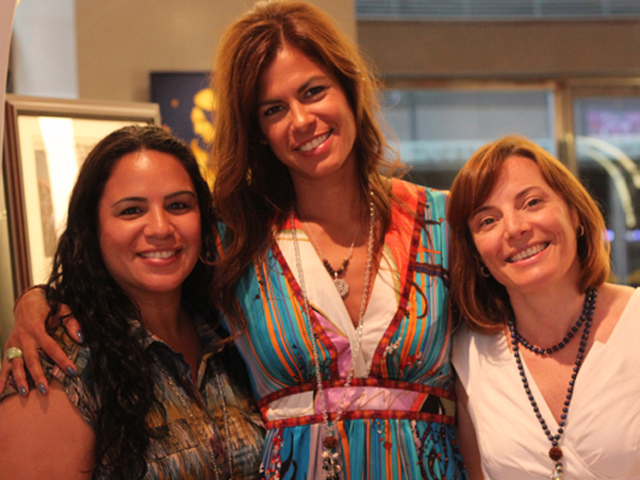
Dr. Angelica Perez (Photo/India Perez-Urbano)

Dr. Angelica Perez (Photo/India Perez-Urbano)

If Dr. Angelica Perez sees a young 20-something girl working in a store, it’s not rare for her to ask, “Are you in college?”

“That’s something I’ve always done, and I’ll do that forever, until I die,” she says. “That to me, is my life mission.”

Dr. Perez has always been an independent thinker. When she was a teenager, although all of her peers applied to the nearest high schools, Perez never limited herself. Instead, she thought, “I want to go to the best school I could go to.”

Today at 45, that way of thinking has taken her far. Besides having her own clinical psychology practice, she also is the publisher and CEO of New Latina — an online resource for other career-driven Latinas, and the newly created online ELLA Leadership Institute, which after only a week of existing, already has more than 2,000 members worldwide.

“What I love the most is when I can help a woman truly identify her potential and embrace it,” says Dr. Perez. “When I can help her see how much bigger she is than she thinks she is, that’s true empowerment… Having them own that, makes my day.

Growing up, as the eldest daughter of immigrant parents from the Dominican Republic, she says she grew up very fast in a neighborhood known for drugs and shootings in the 1980’s.

“You’re what they call the ‘cultural broker’ or bridge — I was always empowering people around me,” says the woman who as a girl made her bedroom a little classroom. “I never felt like I had a childhood or teenage-hood. I almost felt like I was a social worker growing up — putting fires out for a lot of people.”

She says little by little she learned by observing people, how to resolve issues.

“Psychology was a perfect match for someone who wanted to help people and intervene,” says Dr. Perez, who originally set out to be a pediatrician because of her father’s dream.

Eventually, she went on to complete her PhD in clinical psychology from Fordham University.

“The majority of my work is on women,” says the mother of four children, about her 25 year career.

“What I started realizing is that a lot of these Latinas coming to my practice were coming in because they were frustrated by the challenges they were facing in trying to become ambitious Latinas, and figuring out what they need to do,” she says. “So I found myself doing more career coaching than psychiatric evaluations.”

She soon realized what the underlying issue was.

“They were coming in without mentors at work and not having role models,” says Dr. Perez about her patients who had parents who have never worked in corporate America, or attended college. “I hardly have women who are depressed, they just don’t have a lot of confidence.”

She says just as our mother’s were pioneers in a new country, the new generation is now navigating their way into the unchartered corporate world.

“That’s why it’s important to give women connections to influential networks, and teach them what is the strategy to succeed in their career sector,” says Dr. Perez who has been working on creating the Ella Leadership Institute for about a year. “What I want to do is not have inspirational events anymore where women are inspired, and then go home and there’s nothing. What I want to do is create an event that’s value driven.”

She plans on hosting an annual conference and networking events that are TEDx style, with an exchange of ideas. What started off as a group on Facebook, is now an online network of more than 27 groups of like-minded women, grouped by region and expertise.

“I really believe that Latinas are going to globally take over the world,” she says.

Originally published on NBCLatino.com.
Rita Moreno reveals all in her new memoir

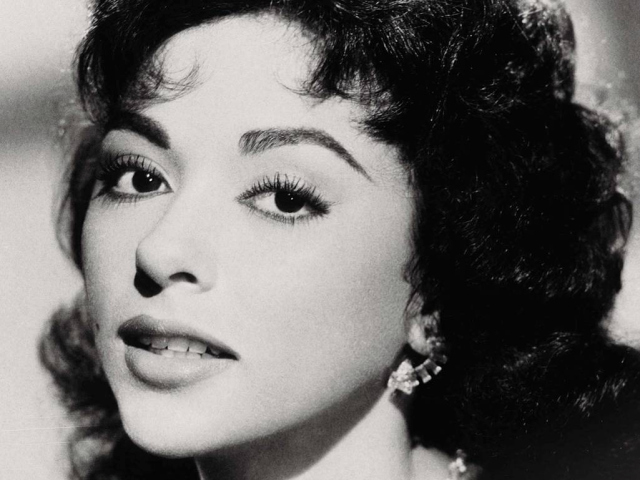
Rita Moreno (Courtesy Rita Moreno Archives)

Rita Moreno (Courtesy Rita Moreno Archives)

Rita Moreno, at 81, says she might return to taking flamenco classes now that she has finished writing her book, “Rita Moreno: A Memoir,” which hit shelves this week.

The first Latina to win an Academy Award (Best Supporting Actress for her portrayal of Anita, the tough girlfriend to the Sharks’ gang leader in “West Side Story”), was also one of the few artists to also win an Emmy, a Grammy and a Tony Award. The Puerto Rican-born actress has been breaking down barriers in Hollywood for more than 50 years, and last year, she concluded a sold-out run of her one-woman show, “Life Without Makeup,” in Berkeley, Calif. In her book, she talks about all of it, including her love life in between.

“I got inspired by doing a play about my life in Berkeley where I live,” says Moreno about what made her write her memoir now. “It had so much success with audiences, I figured a book would be better, because I could include a lot more material — that’s how it started.”

She says her love for performing and dancing began at a very young age.

“I started dancing for grandpa in Puerto Rico when I was 3 or 5,” says Moreno. “He’d put on some music — I’m sure it was salsa, and I’d shake my little booty and everyone thought it was adorable. I loved the attention. It’s also another way of being appreciated…through an audience.”

The very graceful actress with a feminine voice and manner, was also born very headstrong. She says she felt an incessant pull to audition for her first play at just 13 and asked her mom to take her.

“It was very interesting, because I had never been in a theater,” says Moreno, who had at the time been taking dance lessons. “Doing a play was exotic. It was a wonderful experience, but the play [“Skydrift”] closed the very next day. That gave me the taste of how cruel show business could be…”

She says the business changed a lot since she started her acting career. Moreno says it’s still not really great for Latinos in film yet, but at least the door is ajar.

“It really was impossible,” she remembers. “There were no Latinos anywhere, and if there were, they would play Indians. [Today,] Jennifer Lopez is able to talk like herself. When I did films, I always had to do an accent.”

But the memory that will always bring a smile to her face, she says, is getting an Oscar.

“It was my very first award and still the greatest of all,” she says. “I was really in disbelief. I couldn’t believe I beat Judy Garland. I didn’t have a speech ready. It never occurred to me…I was so unprepared.”

She says she played back the video of that moment in time, many times, to her two grandsons who are now 14 and 12. She can still recite it by memory.

“‘I don’t believe it…pause…Good Lord, I don’t believe it…pause…I leave you with that,’ That was it!” laughs Moreno. “That sure was poetic, huh? It certainly shows I was very surprised.”

Besides her award-winning career, what it was like moving to New York City, and leaving her brother in Puerto Rico at age 5, Moreno also writes openly about a short fling with singer Elvis Presley and her tumultuous 8-year love affair with actor Marlon Brando — which at one point dragged her low enough to almost commit suicide. Since then, she’s learned a lot about herself, and love.

“Love is a great deal about respecting the person you’re with,” says Moreno, who later had a happy 45-year marriage with Leonard Gordon. “That’s what makes a lasting relationship. Romantic love is all based on fantasy. The people who dream of the handsome prince are in for a big surprise.”

Instead of fantasizing, she says she’s learned it’s more practical to follow your instinct and ask yourself, “Is this the person I want to spend the rest of my life with?”

She says that was one of the biggest questions she’s ever asked herself, but she ultimately chose her husband because she felt he offered her “enormous protection.”

“I had too many frauders in my life,” says Moreno. “Also, he a sense of humor — he really made me laugh — that has always been very important. We met through a mutual friend who just felt we were meant for each other.”

She concurs their gut was right. They had a daughter and spent many happy years together until his death in 2010.

Just last night, she says excitedly that Justice Sonia Sotomayor came to her book party at the house of the producer of HBO’s controversial series, “Oz,” from which she won an ALMA Award for Best Actress in a Drama Series in 1998, 1999 and 2002.

“I loved it,” says Moreno about Sotomayor’s book, which she narrated for audio tape. “It’s a wonderful book and she’s a remarkable woman.”

On March 7, there will be a special screening of “West Side Story,” and a book signing of “Rita Moreno: A Memoir,” at New York’s Cinema Arts Centre.

“It’s the whole business of presenting my life to an audience,” she says. “I hope people will be moved by it…cry at the sad stuff…laugh at the funny stuff…”

Originally published on NBCLatino.com

Latina Leaders: A social worker teaches to use your own experiences for empowerment

Cynthia Santiago at a workshop. (Photo/Rachel Breitman)

Cynthia Santiago at a workshop. (Photo/Rachel Breitman)

Cynthia Santiago is not your typical clinical social worker, she works full-time as a program director for counseling in New York City public schools, she has a private practice, and offers workshops in self-development which has helped thousands of Latinas and families in the city. In addition to writing her own blog called, Latina Wellness, she contributes to Vidavibrante.com and SoLatina.com.

For Santiago, social work was a pretty obvious path, because she remembers clearly wanting to help others from as young as age 4.

“I was always a very sensitive, compassionate kid,” she says. “I would cry when other kids would cry. I couldn’t really see other people in pain without being impacted. It would kind of crush me.”

She grew up in a home where her step dad used to abuse her mom, emotionally and physically, and one of Santiago’s first roles as a social worker — after graduating with a master’s degree in social work from Fordham University — was working with battered women and children.

“I could think, ‘Oh I had a horrible life,’ that’s where a lot of people go,’” says Santiago, who instead learned from her experience — not to be a victim and to use bad situations to her advantage. “It’s a way of empowerment and dealing with life, because life is life and stuff is going to happen.”

Her life experience, trained her for her future career.

“I always loved helping people, but I didn’t like the models I was exposed to,” says Santiago, describing the theories she learned in school. “There was an idea that you start wherever the client is. There’s also this idea that you have to let people be, but just being doesn’t allow for change.”

So she says she made the decision to be innovative and started offering her patients alternative ways of thinking – at least to provide them with the opportunity to have another view. She would ask them, “Have you thought about this?” or “What if you shifted or reframed where you are right now?”

“That was very different from what I was originally trained to do, and that’s why I started coaching,” says Santiago. “I really believe in helping women, and people, be their best self.”

She says her job gives her complete joy. Her absolute favorite part is writing her blog, because of the fulfillment it gives her.

“My second favorite part is running the group coaching sessions,” says the 44-year-old. “There is such a wonderful tremendous energy I get from sitting in a gathering of Latinas who show up because they want to figure out how to live their dream life. They want to grow and change and improve. It’s so inspiring that I leave those sessions on a natural high.”

She says the other night 22 women came to her workshop, and it was so full of inspiration and energy that she had trouble sleeping afterwards.

“I was explaining to them how much I do, and over the years, I have not really thought about not being able to do it, but how to make room for it,” says Santiago whose typical day starts at her program director job counseling for schools, where she oversees about 24 people. “I’m not really in an office. I go out to the schools and move around. I do Latina Wellness and see clients in the evenings.”

She says she sees a lot of people wanting to make a change, but they feel stuck and don’t know how to start.

“Most people, when they are facing a challenge, will automatically think, ‘I don’t know what to do about this,’ but I help them think, ‘What are my options?’,” says Santiago. “There is always another way, but you have to be in a place to think that way to make that possible.”

Ultimately, she says everybody wants to live a life where they feel meaning and purpose, and that’s why she started Latina Wellness –  to give Latinas the tools to do that.

“I hear from women all the time that they feel empowered, and I can’t express enough how grateful I am to live my dream, and what it means to help others live their dream,” she says.

This article was originally published on NBCLatino.com, and was nominated for a 2014 NASW Media Award.

10 tips for an emotionally healthy new year

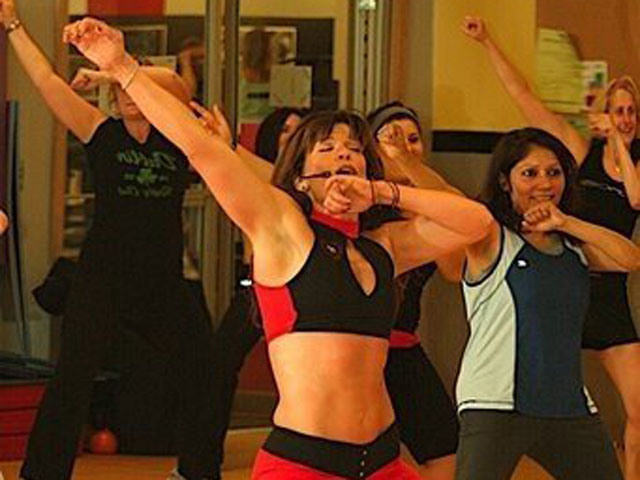
Wellness expert/personal trainer/nutrition coach, Josette Puig, giving a group fitness class. (Courtesy Josette Puig)

Wellness expert/personal trainer/nutrition coach, Josette Puig, giving a group fitness class. (Courtesy Josette Puig)

It’s a brand new year, and you are anxious to start 2013 with vigor, but there’s a small problem –you’re feeling sluggish after about a month straight of holiday parties, drinking, and not eating right.

Not to worry; here comes wellness expert and author of “Frumpy to Fabulous: One Change a Week to a Healthier You,” Josette Puig, to the rescue. She says emotional health and energy are intrinsically tied to your overall health, as well as what you eat.

“People are so overwhelmed with so many diets, they don’t realize processed food is making them ill,” says Puig, whose own doctor gave her antidepressants before she learned it was processed foods and sugar which were making her feel unstable.

What inspired Puig to write her book was the frustration of seeing others not know how to eat as well — depriving themselves entirely of carbohydrates and meat. She recommends doing one change a week to improve your physical and emotional health.

Here are her 10 tips to an emotionally healthy year:

1. The most important thing to do first is detox. — Cut out sugar, processed foods and alcohol from your diet for a good month, at least. They are depressants, physically and mentally; they suppress your immune system. Puig recommends Stevia if you need a sweetener, as it’s natural and it’s not going to harbor any sort of side effects like other sweeteners do. Certainly, if you can keep this up as a lifestyle, even better.

2. Start your day with a motivational quote. — Whether you stick them on your nightstand or your Facebook wall, it triggers something and changes your frame of mind. Puig says that’s one of the biggest things that have helped her, especially in becoming a motivator for others. You can subscribe to receive them daily in your e-mail, or even download a free app for your smartphone.

3. Exercise — even if for as little as 10 minutes. — It releases endorphins, and they make you happy. Ideally, it is great to do first thing in the morning to kick start your day, but get it in whenever you can get it in. Even if you turn on your radio while making dinner, that’s better than not doing anything at all. If you enjoy running, swimming — whatever you enjoy doing, that’s what you should do in order to keep it up.

4. Eat breakfast within 30 minutes of waking up. — It can be something as simple as wheat toast with peanut butter. This will set your energy and pace for the day — not just physical, but emotional energy, too. If you start your day by skipping breakfast, all you are doing is slowing down your metabolism and your emotional energy, as well. If you are not hungry, that’s a huge sign that your metabolism has shut down and not working properly. Puig says it took her four months to get my metabolism working properly like a well-oiled machine. She says if you skip breakfast for long enough, you’re going to start storing fat in places you used to not store fat — this is a red flag.

5. Increase your Omega-3 intake. — This can be found in walnuts, avocados, olive oil and fish oils. Omega-3 helps with the brain, metabolism and helps you lose weight. Puig highly suggests fish oils before bed, as they will help you sleep and feel better. They also help people with depression, as they improve emotional energy.

6. Say “yes” to good carbs. — Make sure you have complex carbohydrates at breakfast, lunch and dinner. This includes, sweet potatoes, brown rice, oatmeal, whole wheat bread – and then fit in your snacks with omega-3s in between. You want to stagger it to keep your energy stable all day long. This is better than having coffee and a doughnut for a midday snack, which will give you a sugar high and then crash. Puig maintains great energy the entire day by eating apple slices with natural almond butter, or avocado and sliced turkey roll-ups. As a national fitness competitor, she says she eats six to seven times a day — even Greek yogurt and an ounce of crushed walnuts and honey before bed — which helps her sleep better and helps keep her metabolism up.

7. Drink a lot of water. — The key is drinking at least half of your body weight in ounces of water. If you weigh 150 pounds, you need to be consuming 75 ounces of water. And drink more, if you are trying to lose weight. When people are tired, they think, ‘Let me eat a candy bar,’ but sometimes all they need is water. For every ounce of caffeinated beverage, you are taking away an ounce of water. It’s also great for your skin and relieves headaches.

8. Get rid of the deadweight friends. — Negative people can drag you down emotionally and be very draining. Determine who is anchoring you down, and your real friends pushing you forward. You have to take care of you first. Puig says she has had a better life after doing this and feels she’s setting an example to her four children. She says to surround yourself with positive people, because in this day and age no one is looking out for you but you.

9. Sleep. — So many people aren’t getting enough sleep and that affects their emotional well-being. Not many people know how to turn off the light and roll over anymore, causing them to burn out. Start turning the television off and putting your phone away an hour before bed. Puig says she has noticed her children unwind much better after doing this. She says it’s just a habit that most people have lost in this era of technology. Find something else to do to unwind like reading, meditating, or chatting with your spouse. Have some sort of routine to re-learn how to turn off the light and go to sleep.

10. Set short-term goals. — These help with emotional well-being. Puig says she lost 40 pounds in 2004, by setting short-term goals. She says making one change a week, such as doing pushups on her toes instead of her knees, helped her keep pushing herself. Two years later, she was in a fitness competition. For every day she works out, Puig also puts a dollar in a jar. With the money she saved at the end of the year, she was able to take herself on a cruise for her 40th birthday. It’s just a little thing to keep you going.

Originally published on NBCLatino.com.
First-time filmmaker devotes herself to Puerto Rican veterans, “The Borinqueneers”

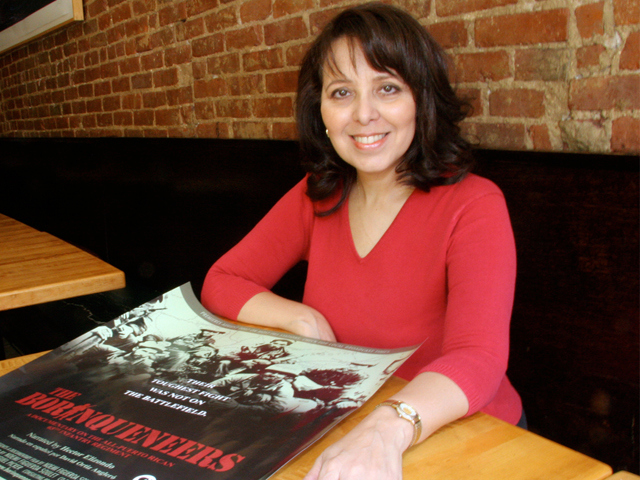
Documentary filmmaker, Noemi Figueroa. (Courtesy El Pozo Productions)

Documentary filmmaker, Noemi Figueroa. (Courtesy El Pozo Productions)

Noemi Figueroa Soulet had a background in Hispanic commercials and acting and was planning on becoming a dance therapist, but somehow the story of the Puerto Rican 65th Infantry Regiment, the only Hispanic-segregated unit in Army history during World Wars I and II and the Korean War, lured all of her attention. So much so, that the Nuyorican, without any filmmaking experience, dedicated nearly a decade of her life to creating her first and only documentary, “The Borinqueneers,” in order to tell their story.

“The Borinqueneers” is the first major documentary to chronicle the story of these forgotten soldiers. The one-hour version premiered nationally for the first time on PBS in 2007, and the Armed Forces Network aired the film to more than 850,000 U.S. troops overseas. Having won many awards in the past five years, throughout the U.S. and Puerto Rico, it’s screening again on Saturday, November 17, at the 2012 International Puerto Rican Heritage Film Festival in New York City.

“I’ve always been interested in Latino issues and trying to show positive role models and show that we are the fabric of society,” says Soulet, producer, director and writer of “The Borinqueneers.” “If anything proves that, it is the service of our soldiers – that’s the ultimate sacrifice.”

Throughout the nine years it took Soulet to make the film, she interviewed approximately 275 Puerto Rican veterans over the phone and in person. Soulet says the majority of the 65th veterans live in Puerto Rico and Florida, but she has even interviewed a Mormon in Utah.

“The hardest part was selecting them…24 appear in the film,” says Soulet, who explains the most time- consuming part was the fundraising needed to fund the film and do the research. “There was very little information out there…I remember contacting the Center for Military History inWashington DC…I began forming relationships with people through the internet.”

The more she talked with veterans, the more committed to the project she got.

“There was a point that I had gone in so deep there was a point of no return,” says Soulet, who says she bonded deeply with the “viejitos,” as Soulet calls them, and found the subject matter of a lifetime. “They’re dying — you then feel, ‘If I give up, and all these years are wasted for nothing and their stories don’t get out,’ I would feel a tremendous guilt.”

Soulet, now 55, slowly had become the voice of the Puerto Rican soldiers that no one ever heard about.

“In my film a veteran says at the end, ‘I just want the American people to know we did our share,’” says the filmmaker, adding,  “They would ask me, ‘Noemi, when are you going to finish?’ They wanted their story told.”

And she says years after the film has been completed, the veterans continue to call her.

Soulet recalls a story of a veteran who was wearing one of the 65th Regiment caps, which she sells on her Web site. “He went to pay for the meal, and the cashier recognized the cap and said, ‘Are you a Borinqueneer? I can’t charge you. You’re one of our heros.’ He called me, so proud, and I thought, ‘That’s why I did this.’”

Soulet says by taking nine years to complete her film, she’s formed relationships so strong that some of the men are like adoptive fathers to her.

“It really affects me and breaks my heart, because now they are going fast,” says Soulet about the passing of many of the veterans year by year. “I’ll get an e-mail from the veteran’s family saying they passed away, and that I meant so much to him.”

Soulet says in some cases, she only spoke to a veteran only one or two hours, but they never forgot those few minutes in which someone was truly listening.

“When they’re gone, and when I’m gone, this film will always be there,” says Soulet, who dedicates her days now doing national presentations about the 65th Regiment. “That’s my legacy, because I don’t have children…This is my baby.”

Originally published on NBCLatino.com.
New site focuses on finding mentors for Latino youth

Courtesy Big Brothers Big Sisters of America

Courtesy Big Brothers Big Sisters of America

Due to being short-staffed, Hector Cortez has been working three director positions at the national headquarters of the iconic Big Brothers Big Sisters of America in Philadelphia – director of Hispanic mentoring, vice president of strategic community engagement, and chief diversity officer. He doesn’t do it for the money, because he only gets paid one salary. He says he does it because having a mentor changed his life drastically for the better, and he’s working his hardest to replicate that experience for other Latino children.

After three years at Big Brothers Big Sisters of America trying to entice Latinos to be mentors, Cortez is excited to announce the launch of LatinoBigs.org this week- the nation’s first bilingual Web site focused on one-to-one long-term youth mentoring services. The site will be a platform to recruit more Latino volunteers and will allow mentors to share their stories of inspiration.

“It’s important to me, because I had a mentor in my life when I was in high school,” says Cortez whose father died when he was six, and his mother raised six children by herself. “I joined a street gang and started doing drugs. I just didn’t care, but it was this mentor who changed my life, and because of him, I was able to graduate high school.”

Cortez says his mentor also inspired him and made it possible for him to go to college.

“He was able to talk to a small college and influenced them to accept me even though my grades were not good,” says Cortez who was raised in Chicago but is originally from Puerto Rico. “He said, ‘Take a chance on this kid,’ and they paid for it. I was on probation the first quarter, and I made it. I completed four years in three and then did my masters, and it was because of him.”

Hector Cortez (Courtesy Big Brothers Big Sisters of America)

Hector Cortez (Courtesy Big Brothers Big Sisters of America)

Cortez says his mentor influenced him to care about people, to care about what you do in your life, and to care about giving back. Through Big Brothers Big Sisters of America, he says more than 200,000 kids a year are mentored, and one volunteer is needed for every child for one-to-one mentoring.

“As we’ve grown, 20 percent of all the children from across the nation are Latino,” says Cortez, who expects that number to grow at least 4 to 6 percent a year. “One of the things that’s critical to us is volunteers, because only 9 percent of the volunteers are Latinos…Latino children, by the year 2015, are going to be the biggest group – they will be our leaders, and they need help now.”

He says LatinoBigs.org was launched to create a buzz, because there are a lot of kids who don’t have adults in their life and need someone to help guide them.

“We would really like to recruit more male volunteers,” says Cortez, because the program which requires a commitment of 3 to 4 hours a month, for a year, tends to mostly recruit women. “Instead of watching TV or a football game, spend it with a kid and you can make a difference…When you are a mentor something happens to you as well – it’s fulfilling.”

Cortez also mentions how one pivotal moment he helped out with was a reminder his work was worthwhile.

“We took a child and their family to a see a college in Georgia,” says Cortez. “After that event, we got an e-mail from the dad saying, ‘My son stopped me and started telling me that he wanted to go to college. That was the first time he spoke of the dream as a reality.’”

Cortez says 90 percent of the Latinos he’s encountered in recent years say they want to go to college, but a big portion don’t think they are going to graduate.

“There’s a big difference between the dream and making it real,” he says. “Mentoring can make it real.”

By impacting one child, Cortez says you really make an impact on the entire family. He was the first in his family to graduate high school, and he says because of that, four out of his six siblings followed his example.

“We want to tell people – do something,” says Cortez. “Help us make a difference.”

Originally published on NBCLatino.com.
Cheech Marin talks about “Born in East L.A.,” 25 years later

BorninLAposter

“Born in East LA” movie poster.

The cult classic film, “Born in East L.A.,” written, directed, and starring Cheech Marin, turned 25 this month. The film is considered groundbreaking for its time, as it was one of the firstHollywood films starring a Latino cast, including Paul Rodriguez, Tony Plana, and Lupe Ontiveros. It also brought issues of Latino identity and immigration to the forefront with a sense of humor.

Marin says when he wrote the movie, at 41, little did he know that it would have such an impact on American society. It was a low-budget film, but it grossed nearly $18 million in box office sales. It also triggered the making of a music video — a spoof of Bruce Springsteen’s famous“Born in the USA” — it is now even being incorporated into college curriculums.

I was surprised at the longevity of it, and how it translated into different ethnicities,” says Marin, now 66, about the topic of immigration in the film. “I learned that it’s a very universal experience — it affected a lot of people. [When the movie premiered] was just the beginning for the biggest wave of immigration.”

He says what inspired him to write the film was real life.

“I was sitting at my kitchen table, reading the LA Times — [an American] kid was caught in an immigration raid, and he was mistakenly sent to Mexico, and at the same time, ‘Born in USA’ came on the radio.”

He says the story kind of wrote itself after that.

“I really never knew what ‘Born in the USA’ was about, so I had to go out and get the record,” says the comedian, who was really born a couple of blocks away from East L.A. — in South Central.

He says it was the success of the song which made his movie being picked up by Universal Pictures a little easier.

“It was really interesting with social commentary weaved in — bilingual issues, issues at the border,” says actor Tony Plana. “It made people laugh and also think. You can’t meet one Latino who doesn’t have a copy of ‘Born in East LA.’”

Plana, who played “the thug” role, later renamed “Feo,” says he still gets recognized from playing that character so many years later. He also remembers Marin as a very gracious and collaborative director to work with.

“He was open to ideas, and finding the socially relevant insight into what we were doing, as well as finding the comedy,” says Plana, who has been in a myriad of productions since then, from the movie “Three Amigos” to the TV series “Ugly Betty.”

He says they worked together to make his underdeveloped character relevant in some way.

“We wanted to create the ultimate Tijuana nightmare,” says Plana who played a character who looked like a rat with slicked hair, parted in the middle and gold teeth and dressed in a little bow tie. “At the time, we had a couple of religious scandals going on, such as Jim Baker and Jimmy Swaggart — preachers who sinned publicly. We wanted to satirize them a little bit. We turned Feo into a guy who extorts money in the name of Jesus.”

He says they improvised a lot of the lines they actually used such as, “You don’t have to thank me, you just have to pay me.”

Marin also remembers improvising the scene where he’s standing outside of the bar, during one of his random jobs in Tijuana that he takes to make money to cross the border back to America. He says he just made everything up as normal people walked by.

His all-time favorite scene though was the “wass sappening boys,” where he has to teach non-Mexican immigrants English so they can fit in when they reach Los Angeles.

“When I was writing that scene, I kind of imagined what that alley looked like,” reminisces Marin who filmed in Tijuana for six weeks. “It was exactly as I had pictured in my mind.”

Plana says these humorous scenes really struck a chord in the Latino community and the national community.

“It didn’t give you answers, but it showed the interesting complexity of who we are — specifically Mexican-Americans,” says Plana. “Mexican-Americans tend to lose their connection, and Cheech’s character becomes more aware of what’s going on down there and starts to identify with it.”

He says to him the most powerful scene is at the end, when Cheech starts crossing the border into the U.S. with a plethora of Mexicans.

“It’s almost prophetic in a way,” says Plana. “This is going to continue unless we do something about it.”

Marin agrees that nothing has changed a quarter of a century later.

“We haven’t come up with a solution,” he says. “We’re dealing with contradiction and hypocrisy. We want immigrants to come in, because we want cheap labor and a certain lifestyle, and we want to persecute them at the same time.”

The avid Chicano art collector says he’s considering directing another movie in the future.

“It’s such a tough job directing,” says Marin, who continues to act. “You really have to love the subject matter.”

“Selena,” the movie, 15 years later

Actress Jennifer Lopez, who plays Selena in the movie “Selena,” performs with her band in one of the scenes from the movie. (RICCO TORRES/AFP/Getty Images)

Actress Jennifer Lopez, who plays Selena in the movie “Selena,” performs with her band in one of the scenes from the movie. (RICCO TORRES/AFP/Getty Images)

Tejana singer Selena Quintanilla-Pérez, known to the world as “Selena,” was taken away much too early at the ripe age of 23. As she was nearing the height of her cross-over music career, she was murdered by her fan club president, Yolanda Saldivar.

In 1997, just two years after her death, Gregory Nava wrote and directed the biopic, “Selena,”about the Tejana star’s life. This film tugged at the hearts of all who watched, because it consoled thousands of fans still mourning their idol’s death, and it also created new Selena fans of people who had never known of her before.

“She reached the English audience through the movie,” says Constance Marie, the actress who played Selena’s mom 15 years ago. “It took her mainstream.”

“Selena” will be making its 15th anniversary appearance kickstarting HBO’s New York International Latino Film Festival on August 13. Although it was nominated for a Grammy for Best Instrumental Composition and a Golden Globe for Best Performance by an Actress in a Musical or Comedy motion picture for Jennifer Lopez, it actually won four ALMA Awards.

The successful film included a Latino-studded cast, including a 28-year-old, Jennifer Lopez, in one of her first feature film roles; Edward James Olmos, who played Selena’s dad; Constance Marie, who played her mom; and Jon Seda, who played Chris Pérez – Selena’s band and soul mate.

Constance Marie still remembers vividly that time in her life when she was cast to play Marcella Quintanilla. The award-winning actress from Los Angeles says she had never even heard of Selena before trying out for the movie, but she was hoping for the lead role.

“I watched videos of her over and over and became a fan while watching them,” says Constance Marie. “Then all of a sudden I had the thought ‘Oh my god, she’s not with us anymore!’ I became a fan and realized she was gone all in a week, and I began to cry.”

When she was told she wasn’t going to play Selena but her mother instead, she says at that point she felt grateful for any opportunity to get Selena’s story out — regardless of the role — the best that she could.

“We all had to sit down and meet the people we were playing,” recalls Constance Marie. “We had to learn how they carried themselves…I needed to connect with and absorb who Marcella Quintanilla was.”

Seda says he practiced with Chris Pérez for many hours and tried his best to mimic him as much as he could.

“It would take years to be able to play as amazing as he can,” says Seda. “Although I respected the fact that he didn’t want to come to the set because it was just to emotional for him, I felt the only way to do him justice and let the world see how great a talent he is was to have him do the solo, and I’m glad he did!”

Constance Marie concurs it was a tough time for everyone. Sometimes, in the middle of interviewing Mrs. Quintanilla, they would both break down and cry.

Constance Marie also had it rough, because her call time was four and a half hours earlier than the rest of the crew. She says being only two years older than Jennifer Lopez, a lot of makeup was needed to look like her mother.

Seda says the recently-late Lupe Ontiveros also had a challenging role — playing the woman who killed Selena and making her one of the most hated women in the world.

“I think she was an unbelievable woman, and I think it was really difficult for her to play that role, because people didn’t deal well with her death,” says Constance Marie. “She was very gracious, and she handled it really well.

There was also controversy about the Puerto Rican Jennifer Lopez being chosen for the role of Selena, rather than a Mexican-American.

“I was really upset about that,” says Constance Marie who worked at a time when Latinos weren’t getting Latino roles. “Everybody should have been so thankful that an actual Latina was actually playing her…”

She says Jennifer Lopez, who often hummed Selena’s “Dreaming of You” on set — bringing the cast to tears –  accomplished a huge undertaking.

“To imitate someone who could sing, but she also had to dance, I don’t think anybody could have done it better — not even myself,” says Constance Marie. “I think Jennifer just picked up the baton that Selena threw out there and kept running with it.”

Until this day, Constance Marie says she has only seen the film once.

“I cannot watch it in its entirety,” says the woman who more than a decade ago embodied the mother of a legend who still lives. “I am a mother, and I can’t even imagine it happening to me.”

Originally published on NBCLatino.com.
Latina Leaders: Optometrist and philanthropist says if you don’t like your job, volunteer

Owner of AshramChic, Veronica Ruelas (center) with business partners – her sister, Jennifer Ruelas-Lauro (left) and Caroline Abramo (right) (Photo/Kristina Puga)

Owner of AshramChic, Veronica Ruelas (center) with business partners – her sister, Jennifer Ruelas-Lauro (left) and Caroline Abramo (right) (Photo/Kristina Puga)

For Veronica Ruelas, it was just a matter of seeing life through a different pair of glasses. She says she didn’t always love her job as an optometrist. It took her having an “Eat, Pray, Love”moment and deciding to study yoga in India, four years ago, which changed her perspective on her life and career.

Today, she is not only an optometrist at ArtSee Eyewear in New York City’s Financial District, she also founded Third Eye Vision – a sustainable clinic where international doctors can come to treat and provide training to the local hospital doctors and staff in an underdeveloped section of India. In order to run this clinic at no cost to patients, she started her own line of ashram clothing and accessories called AshramChic.

“I wasn’t happy with what I was doing for a living so I started googling ashrams,” says the 40-year-old New Yorker. “Before I knew it, I was on my way to an ashram in the Bahamas with a tent — the chicest tent I could find.”

The tall, half Dominican and half Puerto Rican-Mexican doctor, who grew up in a rural part of New York, seems to do everything with a natural sense of style and elegance.

“I wanted to make sure if I was having epiphanies, it’d be in a nice place,” says the fashionably colorful Ruelas.

She says four years ago, her yoga missions became her focus. She lived like a gypsy for about two and a half years, putting her belongings in storage and traveling from ashram to ashram. During this time, she learned the karmic yoga principle of giving back.

“As soon as I started volunteering is when I started falling in love with my career,” says Ruelas. “I had a renewed passion when I wasn’t getting paid for it.”

She says now, when she hears people complaining they don’t like their job, she tells them to start volunteering.

“Life is very fair that way,” she says. “It shows what you put out, you get back. It’s a very balanced equation.”

She says she originally chose the field of optometry as arbitrarily as she was choosing what dress to wear. The only thing she says she was sure of was she wanted to be a professional.

“To know what you want to do, you really have to know yourself,” says Ruelas who just now feels she is fulfilling her destiny.

During the last year and a half, she says she feels like she has finally made a home for herself in New York City.

“I wake up at about 5:30am, and I make hot water with lemon,” says Ruelas about her daily yoga morning ritual. “Then I meditate – sometimes only five minutes…I write in a diary the things I’m grateful for and then set my mantra for the day.”

Mantras such as, “I am fun,” and “I am patient,” is a central point to Ruelas’ life and business. Not only does she pick one for herself every day, she also includes them on the brightly-colored beaded bracelets she makes for Ashram Chic.

Most of the time she says she reminds herself to “Go slow.”

She says this is very important in keeping herself balanced while running her three companies.

“I talk to banking guys about meditation,” says Ruelas about the difference just taking 10 minutes to breathe slowly at your desk can make. “Now I realize when you pause, you get more done. You’re more focused.”

She says we also have so much to learn from our abuelitas.

“Abuelitas are the biggest karmic yogis,” says Ruelas. “They put their dreams aside for us…yoga in its highest form is giving back.”

She says when you start helping others, you don’t think about your problems anymore, and answers come.

“Don’t give up, follow your heart, and volunteer,” recommends Ruelas. “Go back to what you wanted to be when you were little. Do what you enjoy doing and help others do it…Show up, let go, and watch the outcome.”

Uttarkashi 2011 from ThirdEyeVision on Vimeo.

Originally published on NBCLatino.com

Cheech Marin turns 66 and wins Arts Patron of the Year Award

Cheech Marin (Courtesy Cheech Marin)

Cheech Marin (Courtesy Cheech Marin)

This is a big birthday weekend for one of America’s favorite funny men, Cheech Marin. In addition to celebrating his 66th birthday tomorrow, the ArtHamptons International Fine Art Fair is awarding him with its Arts Patron of the Year Award.

Who knew this third generation Mexican-American actor who has been in countless American movies, such as the famous “Cheech and Chong,” and who is particularly known for his heavy Mexican accent, is not really fluent in Spanish? He’s also the world’s largest collector of Chicano art.

“It’s really an honor, because I get it in the Hamptons,” says Marin about what receiving the award means to him. “They don’t really know Chicano art.”

The ArtHamptons, a three-day international art fair in Bridgehampton, NY is expecting 12,000 art lovers to visit during the weekend. Rick Friedman, president of the Hamptons Expo Group, the organizer of ArtHamptons, says Chicano art was brought to the Hamptons for the first time in honor of Marin.

“The reason he was chosen was because he has a 30-year commitment to the arts and giving back to the arts,” says Friedman, who adds that Marin has been integral to the Chicano arts movement in America. “He’s taken a lot of artists under his wing, he’s done 15 museum tours, and written books. We felt that he should be recognized…”

On his birthday, Marin will doing one of the things he loves most, talking about art and new Chicano artists.

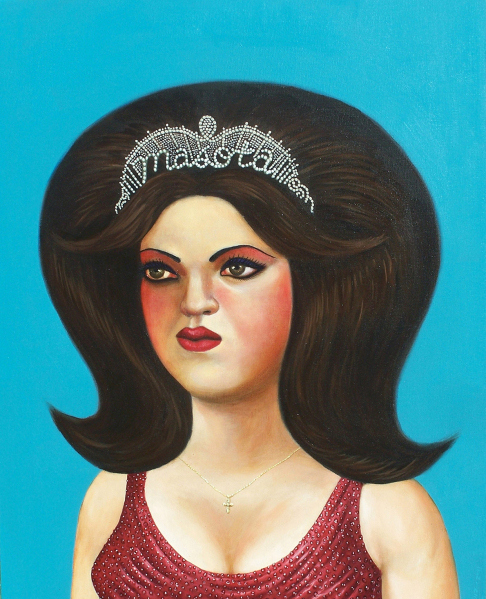
“La Reina de las Mascotas” by Ricardo Ruiz (Thomas Paul Fine Gallery)

“La Reina de las Mascotas” by Ricardo Ruiz (Thomas Paul Fine Gallery)

He says he’s loved art all of his life and he started collecting Chicano art in 1985.

“When I got to the point when I had enough money to buy it, I started collecting,” says Marin who also wanted to help starting artists. “I started doing shows so they can be seen more.”

Today, he says he probably owns around 400 pieces of Chicano art.

“It’s all over my house,” says Marin who just recently moved to a new home in Pacific Palisades, Calif. “It’s like a gallery.”

He says he enjoys spending his days lately traveling the world sharing his art exhibitions, but he can’t bare to pick a favorite.

“It’s like choosing your favorite child…,” says Marin. “It’s a window into another world…It’s like watching movies but at a slower pace.”

He urges everyone to come out and see him on his birthday, or at least check out his website. He also mentions Carlos Donjuan and Carlos Ruiz, both from Texas, as being two up-and-coming Chicano artists to be on the lookout for.

“You don’t need a lot of money,” says the experienced art collector about buying art, although the pieces at ArtHamptons range in price from $5,000 to $30,000. “…just some knowledge. Art fairs are a good place to do some research.”

As far as what he is wishing for when he blows out his candles tomorrow?

“Peace in the Middle East,” says Marin. “Can we all just get along?”

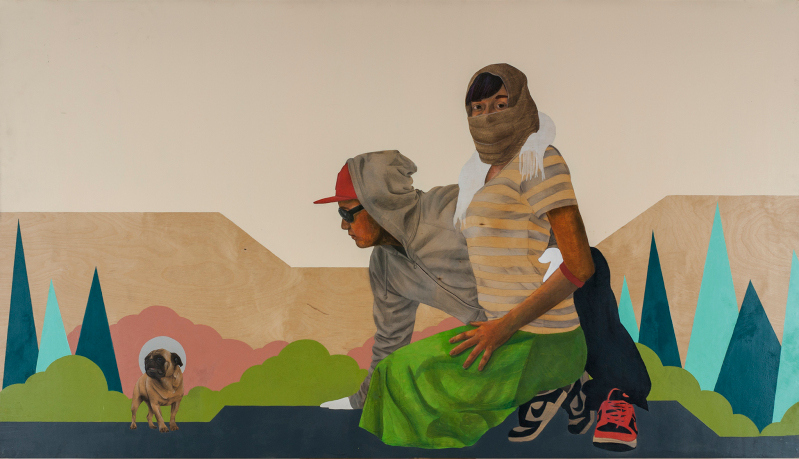
“Tierra Nueva” by Carlos Donjuan (Thomas Paul Fine Gallery)

“Tierra Nueva” by Carlos Donjuan (Thomas Paul Fine Gallery)